Manifest Destiny
20 likes | 148 Vues
Manifest Destiny was a 19th-century belief held by many Americans, particularly Democrats, that settlers were destined to expand across the continent. Emerging after the Civil War, it provided a unifying ideology, fostering a sense of national superiority and divine purpose. The phrase embodied various interpretations, all revolving around the idea of expansion ordained by a higher power. This mindset, combined with private investment and government policies, spurred unprecedented growth as America transformed into the world's leading industrial power through industries like oil, steel, and railroads.


Manifest Destiny
E N D
Presentation Transcript
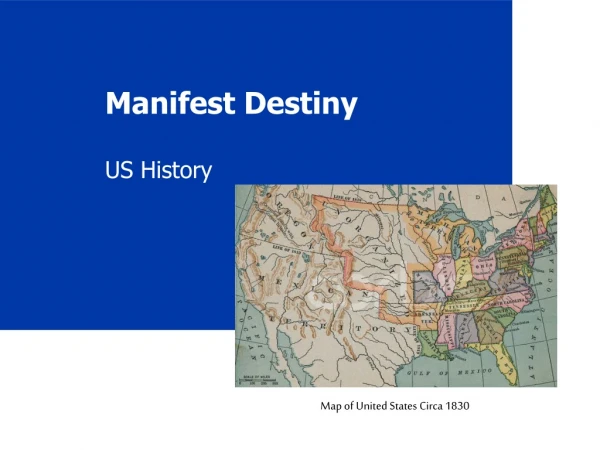
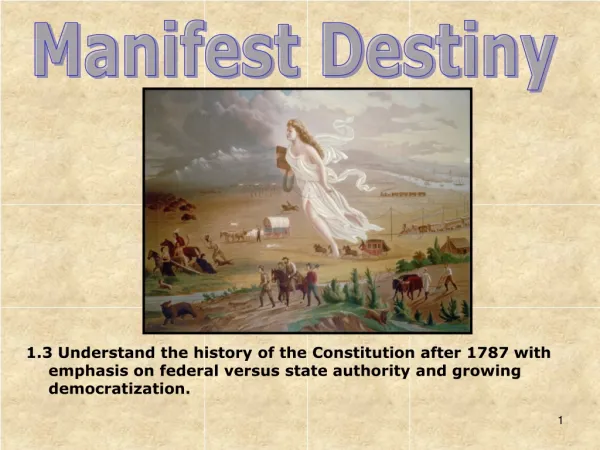
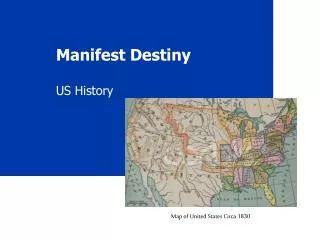
Manifest Destiny • Manifest destiny was the belief held by Democrats in the United States in the 19th century that American settlers were destined to expand across the continent. • This concept, born out of "A sense of mission to redeem the Old World by high example ... generated by the potentialities of a new earth for building a new heaven". • The phrase itself meant many different things to many different people. The unity of the definitions ended at "expansion, prearranged by Heaven". • The United States had just ended the Civil War (1861 – 1865) • There was a need to unify the country • “Manifest Destiny” gave Americans a reason to unify and believe it was the greatest country in the world….God given • With the use of this ‘old mentality’; private investment; government policies; increased immigration (source of labour) – the United States would go through its greatest period of growth in her history
In Summary • Carnegie and Rockefeller differed in their approach to business: Carnegie favored competition and charity; Rockefeller favored monopoly and rugged individualism • The oil, steel, and railroad industries helped each other grow and depended on each other for success • In less than 30 years, the U.S. became the leading manufacturer, transporter, and richest country in the “civilized” world