Understanding Acids, Bases, and the pH Scale: A Comprehensive Guide
171 likes | 315 Vues
This introduction outlines the fundamental properties of acids and bases and the pH scale. Acids are identified by their sour taste, high reactivity, and presence of hydrogen ions (H+), with common examples like hydrochloric and citric acid. Bases, conversely, taste bitter, feel slippery, and contain hydroxide ions (OH-). The pH scale ranges from 0 to 14, indicating the concentration of H+ and OH- ions. This guide also covers experimental methods for predicting and testing pH levels in various substances, emphasizing the importance of understanding these concepts for scientific investigations.


Understanding Acids, Bases, and the pH Scale: A Comprehensive Guide
E N D
Presentation Transcript
An introduction to the properties of acids, bases, and the pH scale Acids, Bases, and pH Oh My!!
Pick up the two pieces of paper from the front table. Monday, September 17th
Taste sour • Very reactive • Contain H+ (hydrogen ions) • Examples: • Hydrochloric Acid (HCl) • Sulfuric Acid (H2SO4) • Citric Acid (citrus fruits) • Acetic Acid (vinegar) Acids
Taste Bitter • Feel slippery (soap) • Contain OH- (hydroxide ions) • Examples: • Soap • Sodium Hydroxide (NaOH) • Ammonia Bases
If the number of H+ ions in a solution is greater than number of OH- ions, the solution is an acid If the OH- ions are greater than the H+ ions, the solution is abase Acids vs. Bases
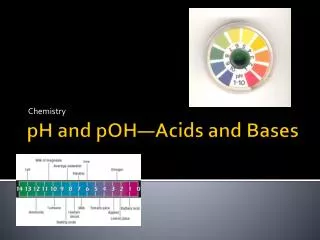
Indicates hydrogen ion (H+) concentration Ranges from 0-14 Acids are found in the 0-6 range Bases are found in the 8-14 range 7 is NEUTRAL!! 1 2 3 4 5 6 7 8 9 10 11 12 13 14 strongest acid neutral strongest base pH SCALE
Do Now: Get out your pH notes from Friday. Monday, September 17th Testing Day Tomorrow!!!
pH SCALE H+ concentration increases OH- concentration increases
As you move from pH 0 to pH 14, the concentration of H+ DECREASES (10 times each number) • As you move from pH 0 to pH 14, the concentration of OH- INCREASES (10 times each number) pH SCALE
As you move from pH 7 to pH 4 what happens to H+ concentration? As you move from pH 2 to pH 8 what happens to OH- concentration? How much more acidic is a solution with a pH 1 vs. pH 5? Practice
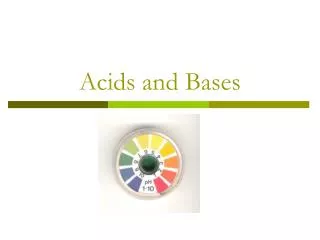
pH paper OR litmus paper TESTING pH
Neutralize acids and bases Keep the pH from undergoing large changes Buffers
Practice: Read the entire article. Write the main point for each paragraph under the paragraph. • Lab: • Make a prediction for each substance. • Move around to each station and dip the pH paper into the solution. • Use the scale to determine the pH of each substance. Practice and Lab
Liquid Prediction Actual pH 1. White milk ________ ________ 2. V-8 Juice ________ ________ 3. Comet cleaner________ ________ 4. Vinegar ________ ________ 5. Baking Soda________ ________ 6. Water ________ ________ 7. Egg ________ ________ 8. Lime Juice ________ ________ Lab
Which solution was the strongest acid? The strongest base? Which solution was the weakest acid? The weakest base? Did you predict that any solution would be neutral? Was your prediction correct? Explain. How many of your predictions were confirmed during the lab? Explain. Post Lab Questions