Understanding Predictive Values: Sensitivity, Specificity, and Test Validity in Veterinary Diagnostics
This comprehensive overview discusses predictive values in the context of veterinary diagnostics, focusing on sensitivity and specificity as key measures of test validity. It explains the concepts of positive predictive value (PPV) and negative predictive value (NPV), highlighting how they reflect the probability of correct diagnoses based on test results. The interplay between disease prevalence and predictive values is also analyzed, noting that higher prevalence increases PPV while decreasing NPV. This guide is essential for understanding how diagnostic tests function in identifying diseases in animals.


Understanding Predictive Values: Sensitivity, Specificity, and Test Validity in Veterinary Diagnostics
E N D
Presentation Transcript
Predictive values Leena Patel
Sensitivity and Specificity • Measure VALIDITY of test • How effective the test is at identifying animals with the disease or without the disease respectively
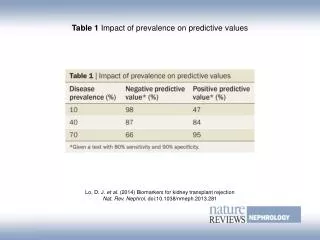
Predictive value • The probability that the test will give a correct diagnosis • Positive predictive value (PPV) - a / (a + b) Proportion of pts with a positive test result which really are positive • Negative predictive value(NPV)- d / (c + d) Proportion of pts with a negative test result which really are negativE
Prevalence • PPV and NPV of a test are affected by the prevalence of the disease in the sample population • If high prevalence of disease, then PPV of test is increased and NPV of test is decreased; and vice versa • Predictive values observed in one study do not apply universally
References • www.bmj.com – statistics notes: Diagnostic tests 2: predictive values • Statistics for Veterinary and Animal Science – A. Petrie & P. Watson