
SlideServe
Menu
Préférences
© SlideServe · v2026

Capitalism

betty avatar
9 diapositives · 250 Views · Feb 19, 2014

Capitalism. Adam Smith (1723-1790). Appointed to the chair of logic in 1751 at the University of Glasgow, Scotland. In 1752 he transferred to the chair of philosophy. On his travels to France, he was influenced by the writings of the physiocrats.
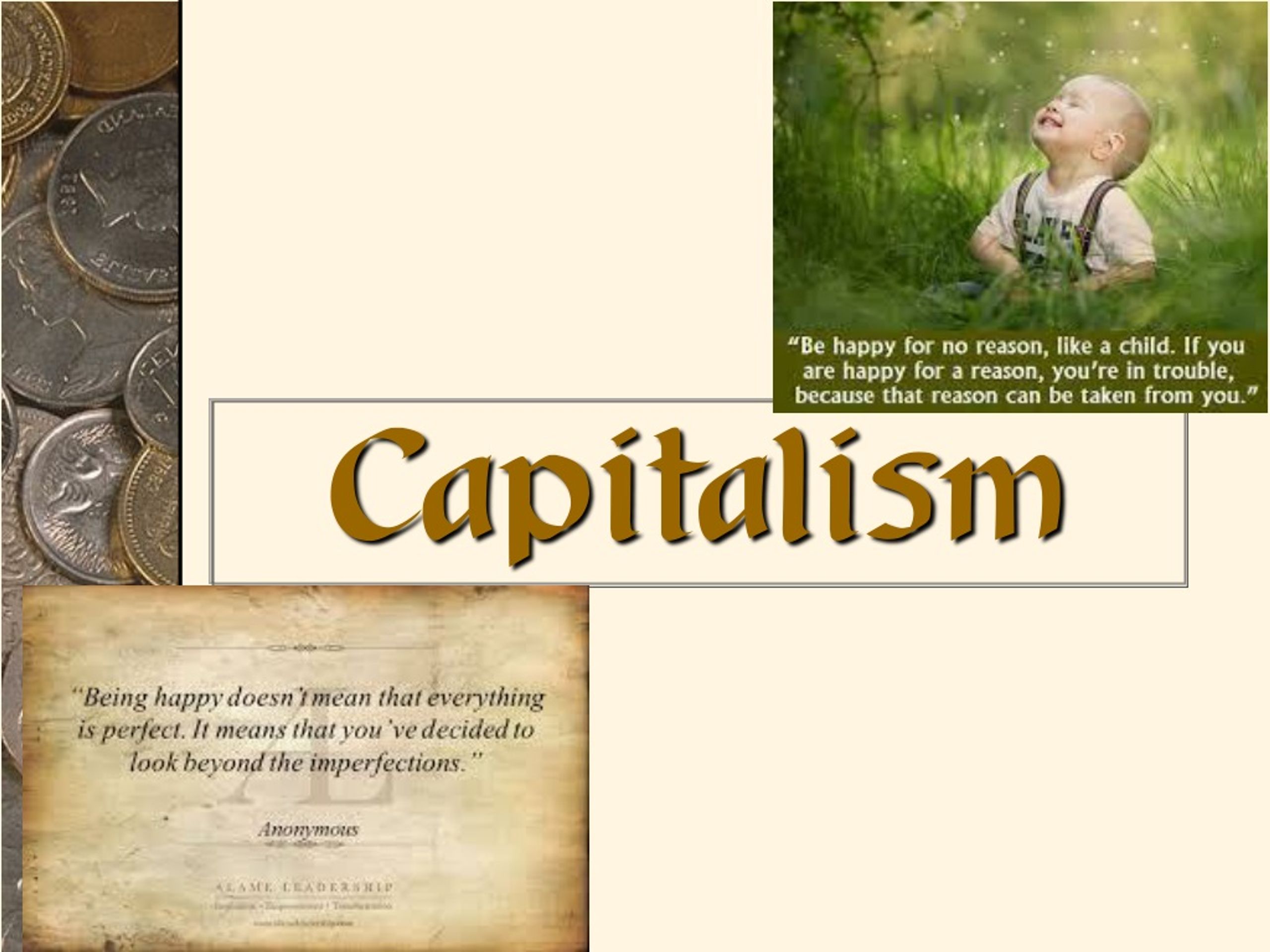
Capitalism - slide 1
01 / 9Capitalism
1 / 17

Télécharger la présentation

Capitalism
Une image / un lien ci-dessous est fourni (tel quel) pour télécharger la présentation

Politique de téléchargement : le contenu du site vous est fourni TEL QUEL pour votre information et votre usage personnel ; il ne peut être vendu, concédé sous licence ni partagé sur d’autres sites sans l’accord de son auteur.Le contenu vous est fourni TEL QUEL, pour votre information et votre usage personnel uniquement. Téléchargez la présentation en cliquant sur ce lien. Lors du téléchargement, si vous ne parvenez pas à télécharger une présentation, l’éditeur a peut-être supprimé le fichier de son serveur.Pendant le téléchargement, si vous ne parvenez pas à obtenir une présentation, le fichier a peut-être été supprimé par l’éditeur.

F I N

Plus de contenu associé

Transcription de la présentation
  1. Capitalism

  2. Adam Smith (1723-1790) • Appointed to the chair of logic in 1751 at the University of Glasgow, Scotland. • In 1752 he transferred to the chair of philosophy. • On his travels to France, he was influenced by the writings of the physiocrats. • 1776  The Theory of Moral Sentiments and an Inquiry Into the Nature of Causes of the Wealth of Nations was published. • A vehement attack of the mercantilist system.

  3. The Wealth of Nations (1776)

  4. Adam Smith’s Attack on Mercantilism • He was making a political argument, NOT an economic one. • Part of the argument was for new economic policy, but.. • An essential part of the argument was for new social and political arrangements. • He argued that the basic unit for social analysis should be the nation, not the state. • He was against the belief that trade was a zero-sum game • It was a positive-sum game. • Both nations gained.

  5. Basic Capitalist Principles • Goods and services are produced for profitable exchange. • Human labor power is a commodity for sale  LABOR IS THE SOURCE OF VALUE. Goods & Service Businesses Households Consumer Spending Wages Labor & Investments

  6. Basic Capitalist Principles • The “Invisible Hand” of the market • Problem How do we survive in a world where we must depend on many others, but where humans are by nature self-interested individuals?? • Solution  the free market, while appearing chaotic and unrestrained, is actually guided to produce the right amount and variety of goods by a so-called “invisible hand.” • Therefore, the basicmarket mechanism is self-regulating!

  7. Basic Capitalist Principles • Individuals seeking success are driven by self-interest  Profit Motive • The Law of Supply and Demand • Individuals who are free to pursue their self-interest will produce goods and services that others want, at prices others will be willing to pay.

  8. Basic Capitalist Principles • Law of Competition • The competitive market system compels producers to be increasingly efficient, and to respond to the desires of consumers. • A social division of labor will maximize the satisfaction of individual wants and needs, given scarce resources. • Government should interfere minimally with the free and efficient workings of the market • Laissez faire [“Leave things alone.”]

  9. There, there it is again—the invisible hand of the marketplace giving us the finger.