
SlideServe
Menu
Préférences
© SlideServe · v2026

Chinese calligraphy

beulah avatar
34 diapositives · 1.3K Views · Sep 01, 2014

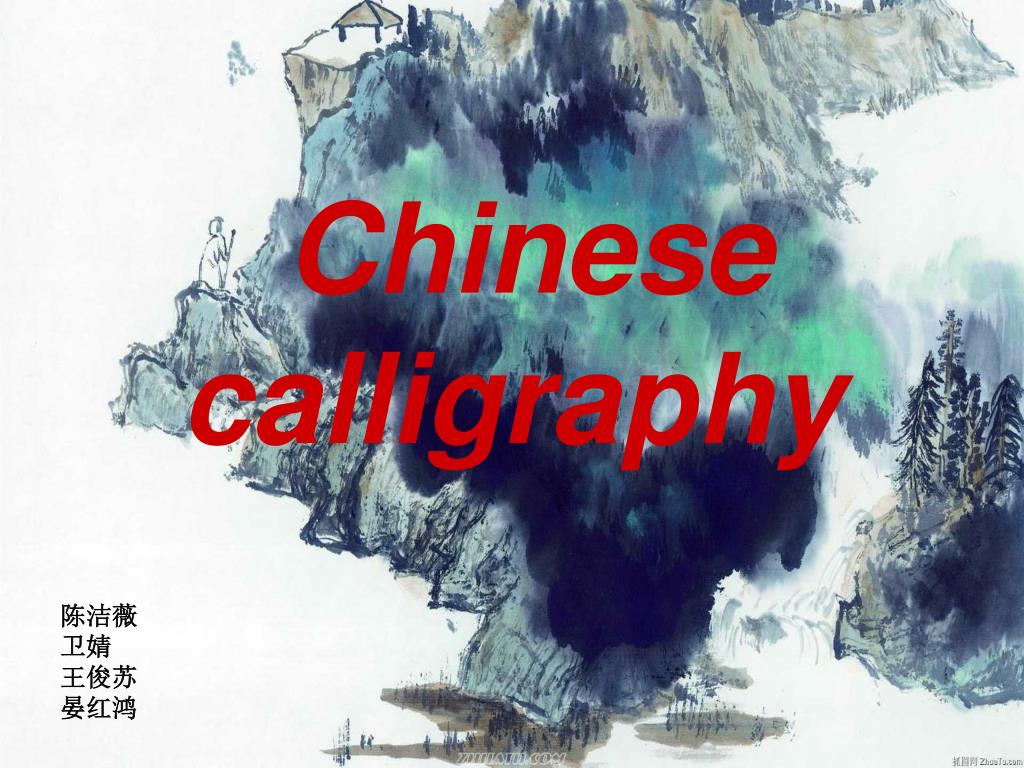
Chinese calligraphy. 陈洁薇 卫婧 王俊苏 晏红鸿. The word "calligraphy" is derived from a Greek word meaning beautiful writing. It has been appreciated as an art form in many different cultures throughout the world, but the stature of calligraphy in Chinese culture is unmatched. Click.
Chinese calligraphy - slide 1
01 / 34Chinese calligraphy
1 / 17

Télécharger la présentation

Chinese calligraphy
Une image / un lien ci-dessous est fourni (tel quel) pour télécharger la présentation

Politique de téléchargement : le contenu du site vous est fourni TEL QUEL pour votre information et votre usage personnel ; il ne peut être vendu, concédé sous licence ni partagé sur d’autres sites sans l’accord de son auteur.Le contenu vous est fourni TEL QUEL, pour votre information et votre usage personnel uniquement. Téléchargez la présentation en cliquant sur ce lien. Lors du téléchargement, si vous ne parvenez pas à télécharger une présentation, l’éditeur a peut-être supprimé le fichier de son serveur.Pendant le téléchargement, si vous ne parvenez pas à obtenir une présentation, le fichier a peut-être été supprimé par l’éditeur.

F I N

Plus de contenu associé

Transcription de la présentation
  1. Chinesecalligraphy 陈洁薇 卫婧 王俊苏 晏红鸿

  2. The word "calligraphy" is derived from a Greek word meaning beautiful writing. It has been appreciated as an art form in many different cultures throughout the world, but the stature of calligraphy in Chinese culture is unmatched. Click

  3. Chinese calligraphy which serves as a tool of information communication by way of writing materials infuses our mode of thinking . Chinese calligraphy is a art practice which manifests Chinese people specific tinking style,personality , temperament(性情) and inclination(癖好).

  4. The features of Chinese Calligraphy

  5. Chinese philosophical thought (哲学思想): • “Yin and Yang Five Elements”(阴阳五行) • “Heaven and Man” (天人合一) • “The Doctrine of Mean” (中庸中合) The unique sense of time and space

  6. Blend mode of thinking and physical movement. • An activity of self-cultivation. • An effective way to enjoy healthy life and longevity.

  7. History of Chinese Calligraphy

  8. Origin: • Calligraphy came with invention of the characters . • Gia Gu Wen, indeed, is a major style of Chinese calligraphy.

  9. Wei & Jin Dynastie: Calligraphy achieved the best in the history at this time. Chinese calligraphy theories published during this period . Wang Hsi-Chih’s Lan Ting Prologue

  10. Wei Heng's ( 衛 恆 ) • Calligraphy Postures of Four Styles ( 四 體 書 勢 )

  11. Madame Wei's ( 衛 夫 人 ) • Map of Strokes Disposition( 筆 陣 圖 )

  12. Wang Hsi-Chih’s ( 王 羲 之 ) Discussion on Calligraphy ( 書 論 )

  13. Basics of Chinese Calligraphy

  14. The Four Treasures • The four treasures of a Chinese calligrapher's (or scholar's) studio are paper, brush, stone.ink stick, and ink

  15. Paper • Paper is one of the most famous Chinese inventions. • Chinese practice calligraphy on Xuan Paper  that is used uniquely for calligraphy and painting.

  16. Brushes • painted pottery, bamboo slips, and silks are all writing materials for brush. • softness and unrestrained freedom • look more vivid, spirited, and rich in different styles.

  17. The ink stick is the unique pigment used for Chinese brush painting and calligraphy. The raw materials of ink stick are pine, oil, lacquer(漆), and etc. A good ink stick can produce beautiful shades of ink density on a good and smooth ink stone. Ink stick / Ink stone

  18. Others: • Water dropper / antique ink stone, jade paperweights brush hanger

  19. Styles of Chinese Calligraphy

  20. 篆書Zuan Style (Seal Style) • The unification of Zuan Shu was in the Chin Dynasty • Solid and stable(结实稳定) • Small Seal Style (Tablet Shiao Zuan 小 篆) • Great Seal Style (Da Zuan 大 篆 ) Lan Ye Tai ( 琅 琊 臺) & Tai San ( 泰 山) Tablets  Yi Shan ( 繹 山) by Lee Si

  21. 隸書:Li Style(Clerical Style) • germinated in the pre-Chin period ( 先秦時代 ). • simplified the complicated strokes of Zuan Shu. • used a bend (弯)instead of making a roundabout turn Chin Li on bamboo rolls

  22. 草書Tsao Style(Running Style) • It was developed almost at the same time with Li Shu • the most simplified • abstract and difficult • "the Two Wangs" ( 二 王 )

  23. 行書Hsin Style(Walking Style) • A style in between Tsao and Kai Styles • established in the Han Dynasty • write fast,freely expressed • Hsin Tsao Shu ( 行 草 書) • Hsin Kai Shu ( 行 楷 書). Zhong Yao’s work in Hsin Kai Shu

  24. 楷書Kai Style(Standard Style) Madame Wei’s small-scale Kai Shu • Initiated(创始)toward the end of the Han Dynasty. (by 王次仲) • symmetrical strokes (笔划整齐对称) • A reference standard for modern Chinese characters handwriting, also develop another handwriting —— pen writing. • Marks the final shape of Chinese characters.

  25. Influence of Chinese Calligraphy

  26. Calligraphy played an important role in Chinese people’s daily life • Writing letters • official documents • literary works • national celebrations and offer sacrifices • weddings and funerals

  27. associations and societies • professionalcalligraphy • special calligraphy class

  28. The spread of Chinese Calligraphy • In ancient time: where there are Chinese people, there are Chinese calligraphy. Inourmoderntime: art ,architecture and design Calligraphy Special issue in Showa period of Japanese

  29. Protection of Chinese Calligraphy Culture

  30. Government’s efforts • Chinese Calligraphers Association (中国书法家协会) • National Art Center for the Study and Writing calligraphy (国家级书法艺术研究与创作中心) • some colleges and universities have established professional calligraphy.

  31. means of propaganda(宣传) and popularization(普及) of calligraphy. • Professional newspapers and magazines • Television and online media • Calligraphy’s foreign exchange activities

  32. Chinese Calligraphy is a part of China. Chinese Calligraphy is also among the world.

  33. Thank you! 陈洁薇 卫婧 王俊苏 晏红鸿