Download
1 / 1
30 likes | 180 Vues
This guide explores best practices in business process control, emphasizing the importance of understanding and managing risks. Organizations often face crises due to a lack of proactive risk identification and compliance-focused strategies. By evaluating control gaps and understanding the full range of risks, businesses can avoid surprises and improve stakeholder satisfaction. This proactive approach not only helps protect the organization's reputation but also enhances its ability to seize opportunities while ensuring business continuity and effective crisis management.

E N D
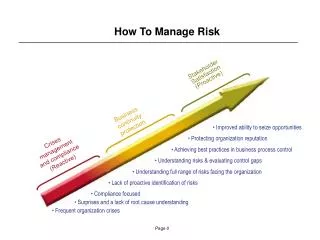
Achieving best practices in business process control • Understanding risks & evaluating control gaps • Understanding full range of risks facing the organization • Lack of proactive identification of risks • Compliance focused • Surprises and a lack of root cause understanding • Frequent organization crises How To Manage Risk Stakeholder Satisfaction (Proactive) Business continuity protection • Improved ability to seize opportunities • Protecting organization reputation Crises management and compliance (Reactive)