
Understanding Depression: Signs, Support, and Treatment Options
Depression affects an estimated 1 in 10 U.S. adults, leading to symptoms like persistent sadness, hopelessness, and loss of interest in activities. To aid recovery, early evaluation and professional treatment are crucial. Engage in physical activity, set achievable goals, and connect with others. If you're supporting a loved one, offer patience, understanding, and assistance in seeking help. Remember to take feelings of despair seriously and encourage open dialogue. If in crisis, reach out for immediate help through professionals or crisis hotlines like the National Suicide Prevention Lifeline.

Understanding Depression: Signs, Support, and Treatment Options
E N D
Presentation Transcript
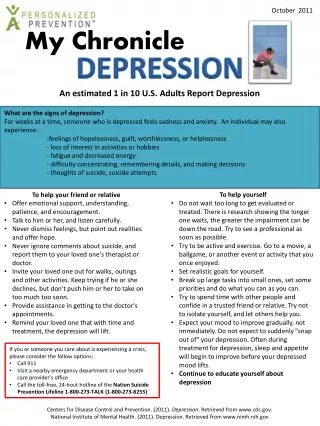
October 2011 My Chronicle DEPRESSION An estimated 1 in 10 U.S. Adults Report Depression What are the signs of depression? For weeks at a time, someone who is depressed feels sadness and anxiety. An individual may also experience: -feelings of hopelessness, guilt, worthlessness, or helplessness - loss of interest in activities or hobbies - fatigue and decreased energy - difficulty concentrating, remembering details, and making decisions - thoughts of suicide, suicide attempts • To help yourself • Do not wait too long to get evaluated or treated. There is research showing the longer one waits, the greater the impairment can be down the road. Try to see a professional as soon as possible. • Try to be active and exercise. Go to a movie, a ballgame, or another event or activity that you once enjoyed. • Set realistic goals for yourself. • Break up large tasks into small ones, set some priorities and do what you can as you can. • Try to spend time with other people and confide in a trusted friend or relative. Try not to isolate yourself, and let others help you. • Expect your mood to improve gradually, not immediately. Do not expect to suddenly "snap out of" your depression. Often during treatment for depression, sleep and appetite will begin to improve before your depressed mood lifts. • Continue to educate yourself about depression • To help your friend or relative • Offer emotional support, understanding, patience, and encouragement. • Talk to him or her, and listen carefully. • Never dismiss feelings, but point out realities and offer hope. • Never ignore comments about suicide, and report them to your loved one's therapist or doctor. • Invite your loved one out for walks, outings and other activities. Keep trying if he or she declines, but don't push him or her to take on too much too soon. • Provide assistance in getting to the doctor's appointments. • Remind your loved one that with time and treatment, the depression will lift. • If you or someone you care about is experiencing a crisis, please consider the follow options: • Call 911 • Visit a nearby emergency department or your health care provider’s office • Call the toll-free, 24-hout hotline of the Nation Suicide Prevention Lifeline 1-800-273-TALK (1-800-273-8255) Centers for Disease Control and Prevention. (2011). Depression. Retrieved from www.cdc.gov. National Institute of Mental Health. (2011). Depression. Retrieved from www.nimh.nih.gov