
SlideServe
Menu
Préférences
© SlideServe · v2026

Why are tropical forests important for everyone in the world

biosworld avatar
2 diapositives · 41 Views · Aug 07, 2023

Why are tropical forests important for everyone in the world

Why are tropical forests important for everyone in the world - slide 1
01 / 2Why are tropical forests important for everyone in the world
1 / 17

Télécharger la présentation

Why are tropical forests important for everyone in the world
Une image / un lien ci-dessous est fourni (tel quel) pour télécharger la présentation

Politique de téléchargement : le contenu du site vous est fourni TEL QUEL pour votre information et votre usage personnel ; il ne peut être vendu, concédé sous licence ni partagé sur d’autres sites sans l’accord de son auteur.Le contenu vous est fourni TEL QUEL, pour votre information et votre usage personnel uniquement. Téléchargez la présentation en cliquant sur ce lien. Lors du téléchargement, si vous ne parvenez pas à télécharger une présentation, l’éditeur a peut-être supprimé le fichier de son serveur.Pendant le téléchargement, si vous ne parvenez pas à obtenir une présentation, le fichier a peut-être été supprimé par l’éditeur.

F I N

Plus de contenu associé

Transcription de la présentation
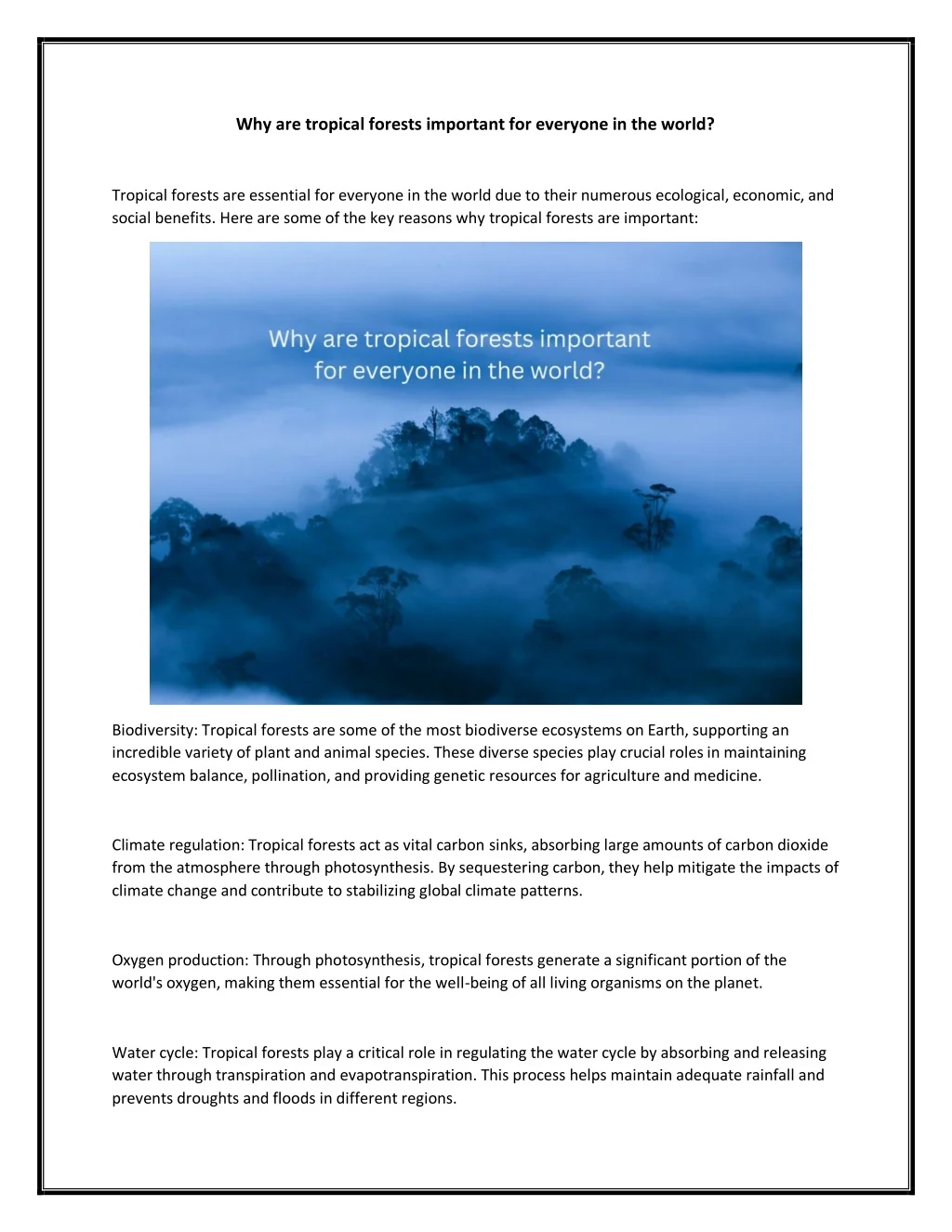
  1. Why are tropical forests important for everyone in the world? Tropical forests are essential for everyone in the world due to their numerous ecological, economic, and social benefits. Here are some of the key reasons why tropical forests are important: Biodiversity: Tropical forests are some of the most biodiverse ecosystems on Earth, supporting an incredible variety of plant and animal species. These diverse species play crucial roles in maintaining ecosystem balance, pollination, and providing genetic resources for agriculture and medicine. Climate regulation: Tropical forests act as vital carbon sinks, absorbing large amounts of carbon dioxide from the atmosphere through photosynthesis. By sequestering carbon, they help mitigate the impacts of climate change and contribute to stabilizing global climate patterns. Oxygen production: Through photosynthesis, tropical forests generate a significant portion of the world's oxygen, making them essential for the well-being of all living organisms on the planet. Water cycle: Tropical forests play a critical role in regulating the water cycle by absorbing and releasing water through transpiration and evapotranspiration. This process helps maintain adequate rainfall and prevents droughts and floods in different regions.

  2. Soil fertility: The rich biodiversity of tropical forests contributes to nutrient recycling and soil fertility, which supports agricultural productivity in surrounding areas and sustains local communities. Indigenous cultures and communities: Tropical forests are often home to indigenous peoples and local communities who have lived in harmony with these ecosystems for generations. These forests hold cultural and spiritual significance for these communities and provide them with essential resources for their livelihoods. Medicinal resources: Many plants found in tropical forests have medicinal properties that have been used for centuries by indigenous communities and have the potential to provide valuable solutions for modern medicine. Economic benefits: Tropical forests are a significant source of revenue for countries through sustainable logging, ecotourism, and the production of various forest products such as rubber, coffee, cocoa, and fruits. Erosion control: The dense vegetation and root systems in tropical forests help prevent soil erosion, protecting valuable agricultural land and reducing sedimentation in rivers and water bodies. Climate adaptation: Tropical forests can enhance the resilience of ecosystems and communities to climate change impacts, offering refuge for species threatened by habitat loss and enabling human populations to adapt to changing conditions. Preserving and sustainably managing tropical forests is crucial for the well-being of the planet and all its inhabitants. Global efforts to conserve these ecosystems are vital for combating climate change, protecting biodiversity, and ensuring a sustainable future for humanity.