
SlideServe
Menu
Préférences
© SlideServe · v2026

Non-pharmacologic Management

bonner avatar
4 diapositives · 282 Views · Jul 18, 2014

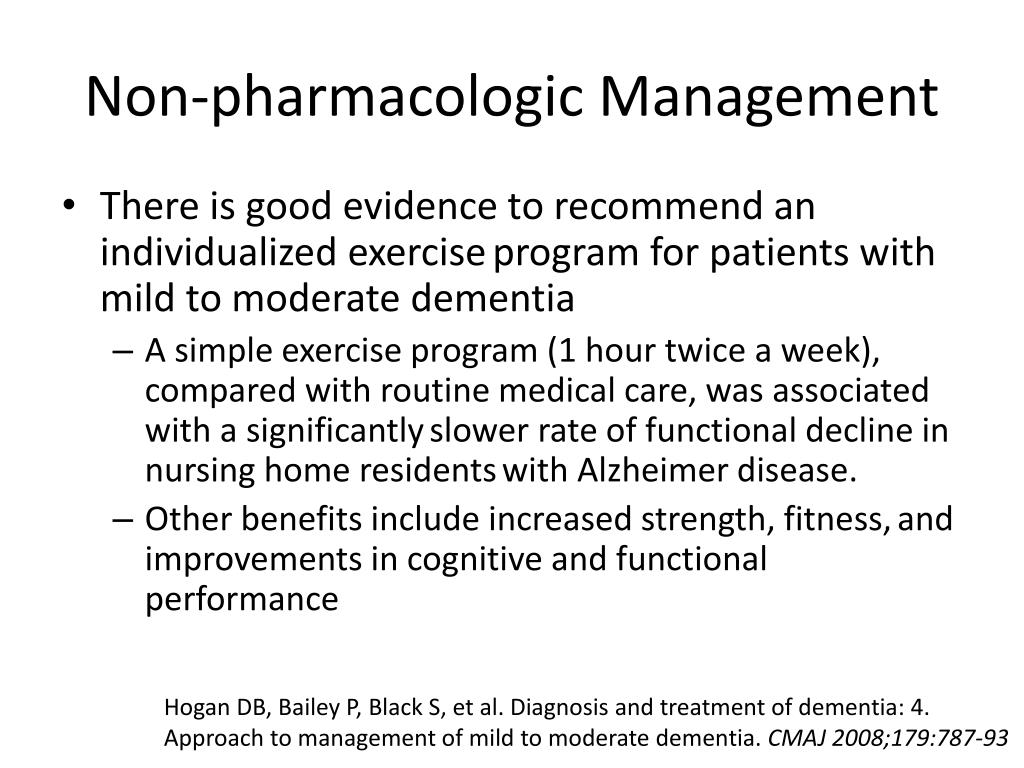
Non-pharmacologic Management. There is good evidence to recommend an individualized exercise program for patients with mild to moderate dementia
Non-pharmacologic Management - slide 1
01 / 4Non-pharmacologic Management
1 / 17

Télécharger la présentation

Non-pharmacologic Management
Une image / un lien ci-dessous est fourni (tel quel) pour télécharger la présentation

Politique de téléchargement : le contenu du site vous est fourni TEL QUEL pour votre information et votre usage personnel ; il ne peut être vendu, concédé sous licence ni partagé sur d’autres sites sans l’accord de son auteur.Le contenu vous est fourni TEL QUEL, pour votre information et votre usage personnel uniquement. Téléchargez la présentation en cliquant sur ce lien. Lors du téléchargement, si vous ne parvenez pas à télécharger une présentation, l’éditeur a peut-être supprimé le fichier de son serveur.Pendant le téléchargement, si vous ne parvenez pas à obtenir une présentation, le fichier a peut-être été supprimé par l’éditeur.

F I N

Plus de contenu associé

Transcription de la présentation
  1. Non-pharmacologic Management • There is good evidence to recommend an individualized exerciseprogram for patients with mild to moderate dementia • A simple exercise program (1 hour twice a week),compared with routine medical care, was associated with a significantlyslower rate of functional decline in nursing home residentswith Alzheimer disease. • Other benefits include increased strength, fitness,and improvements in cognitive and functional performance Hogan DB, Bailey P, Black S, et al. Diagnosis and treatment of dementia: 4. Approach to management of mild to moderate dementia. CMAJ 2008;179:787-93

  2. Non-pharmacologic Management • The following non-pharmacologic interventions also proved to be beneficial: • Environmental modifications,compensatory strategies for the patient, and training of thecaregiver to use effective supervision, problem-solving andcoping strategies to sustain the autonomy and social participationof the patient and the caregiver (training: 10 one-hour sessions over 5 weeks) Hogan DB, Bailey P, Black S, et al. Diagnosis and treatment of dementia: 4. Approach to management of mild to moderate dementia. CMAJ 2008;179:787-93

  3. Non-pharmacologic Management • Statistically significant improvements were seenin the short term (3 months) in the daily functioning of patientsin the intervention group • Significant improvements were alsoseen in the quality of life of both the patient and the caregiverand in the costs of informal caregiving. Hogan DB, Bailey P, Black S, et al. Diagnosis and treatment of dementia: 4. Approach to management of mild to moderate dementia. CMAJ 2008;179:787-93

  4. Non-pharmacologic Management • There is insufficient evidence at this time to recommend cognitivetraining, cognitive rehabilitation or environmental interventionsto either improve or maintain cognitive and functional performancein patients with mild to moderate dementia. Hogan DB, Bailey P, Black S, et al. Diagnosis and treatment of dementia: 4. Approach to management of mild to moderate dementia. CMAJ 2008;179:787-93