
SlideServe
Menu
Préférences
© SlideServe · v2026

Great Blue Heron

braith avatar
8 diapositives · 412 Views · Sep 07, 2012

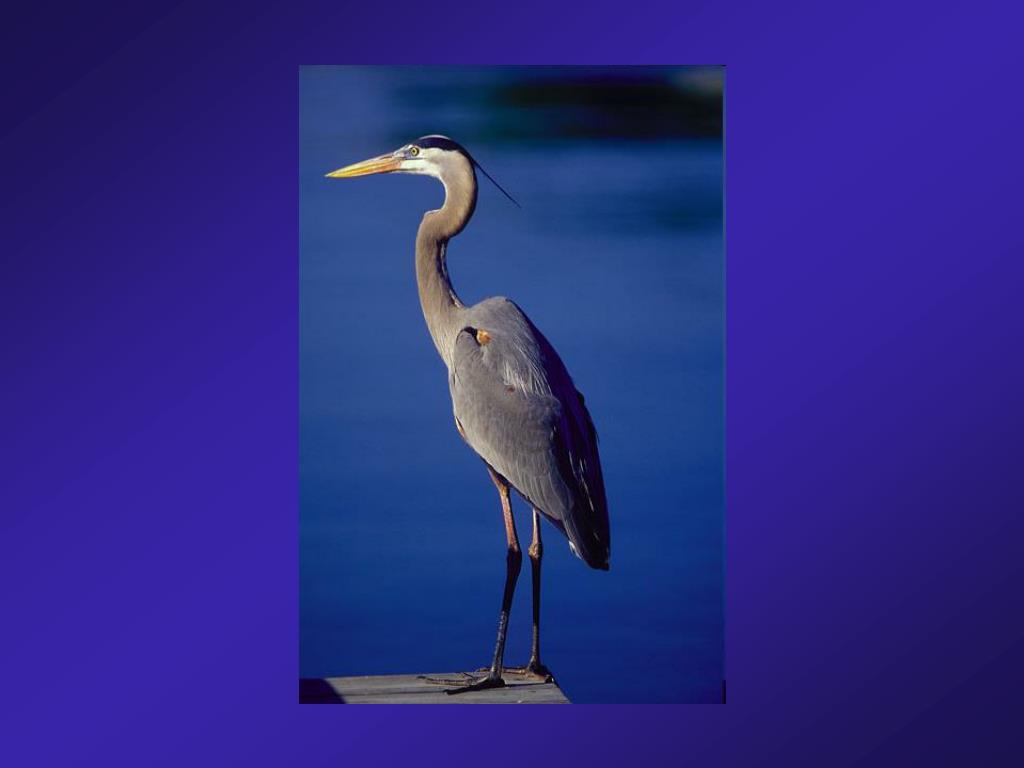
Great Blue Heron. Ardea herodias Largest wading bird and largest North American heron Head-to-tail length of 36-55 in Wingspan of 66-79 in Weight of 4.5-8 lbs Stride is around 9 in, almost in a straight line. Habitat. Fresh and saltwater marshes Mangrove swamps Flooded meadows
Great Blue Heron - slide 1
01 / 8Great Blue Heron
1 / 17

Télécharger la présentation

Great Blue Heron
Une image / un lien ci-dessous est fourni (tel quel) pour télécharger la présentation

Politique de téléchargement : le contenu du site vous est fourni TEL QUEL pour votre information et votre usage personnel ; il ne peut être vendu, concédé sous licence ni partagé sur d’autres sites sans l’accord de son auteur.Le contenu vous est fourni TEL QUEL, pour votre information et votre usage personnel uniquement. Téléchargez la présentation en cliquant sur ce lien. Lors du téléchargement, si vous ne parvenez pas à télécharger une présentation, l’éditeur a peut-être supprimé le fichier de son serveur.Pendant le téléchargement, si vous ne parvenez pas à obtenir une présentation, le fichier a peut-être été supprimé par l’éditeur.

F I N

Plus de contenu associé

Transcription de la présentation

  1. Great Blue Heron • Ardea herodias • Largest wading bird and largest North American heron • Head-to-tail length of 36-55 in • Wingspan of 66-79 in • Weight of 4.5-8 lbs • Stride is around 9 in, almost in a straight line

  2. Habitat • Fresh and saltwater marshes • Mangrove swamps • Flooded meadows • Lake edges • Shorelines near bodies of water, usually nesting in trees or bushes.

  3. Distribution

  4. Diet • Small fish • Shrimps, crabs, aquatic insects • Herons locate their food by sight and usually swallow it whole. Herons have been known to choke on prey that is too large. • Herons use their long legs to wade through shallow water, and spears fish or frogs with its long, sharp bill.

  5. Breeding • Breeding groups are called heronry • The size of these colonies range between 5–500 nests per colony • Females lay three to six pale blue eggs • One brood is raised each year • Predators of eggs and nestlings include turkey vultures, hawks, bears and raccoons

  6. http://www.youtube.com/watch?v=PDs7AUj-FIo