Download
1 / 55
570 likes | 762 Vues
Discover the rich history of ancient Greek running events, including the Stade, Diaulos, Dolichos, and Hoplitodromos. This exploration delves into visual and written evidence from art and literature, showcasing how these events shaped the landscape of athletic competitions. Witness the traditions of the Nemean Games, the significance of the hysplex starter, and the dramatic calls to "ready, set, GO!" Uncover the lesser-known narratives of runners like Philippides and the origins of the marathon, fostering a deeper appreciation for these ancient athletic feats.

E N D
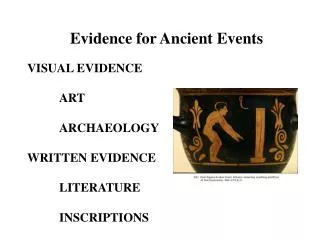
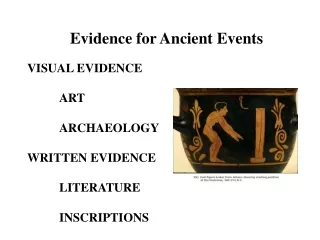
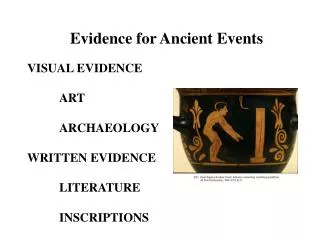
Evidence for Ancient Events VISUAL EVIDENCE ART ARCHAEOLOGY WRITTEN EVIDENCE LITERATURE INSCRIPTIONS
RUNNING EVENTS Stade Diaulos Dolichos Hoplitodromos Hippios Lampadedromia but NOT a Marathon
When all the runners have taken their positions, and the aphetes (starter, in a white himation) has prepared the hysplex to his satisfaction, the salpinktes will blow his trumpet, and the aphetes will shout out three ancient words which are the rough equivalent of our English "ready! set! GO!" "poda para poda" (foot by foot) "ettime" (ready) "ápite" (GO)
Dolichos (7-24 stades the first winner, in 720, was ACANTHUS of Sparta the runners would begin and end their event in the stadium proper, but the race course would wind its way through the Olympic grounds
Harvard 1960.344: Side A: scene at centerPhotograph by Maria Daniels, courtesy of Harvard University Art Museums
Marathon The Greek War with Persia (490 B.C.) • The Evidence: • Herodotus (Miller #28): The Athenian Philippides (or Pheidippides) runs from Athens to Sparta. (145 miles) • Plutarch (Miller #29): Hersippos of Erchi or Eukles announces the battle. Eukles says “Nike” and dies. • Lucian (Miller #30): Philippides runs from Marathon to Athens, announces victory and dies. (26 miles and 385 yards). • Pliny (Miller #31): Philippides runs from Athens to Sparta in two days.