
SlideServe
Menu
Préférences
© SlideServe · v2026

Evidence for Evolution

mindy avatar
23 diapositives · 642 Views · Jul 31, 2014

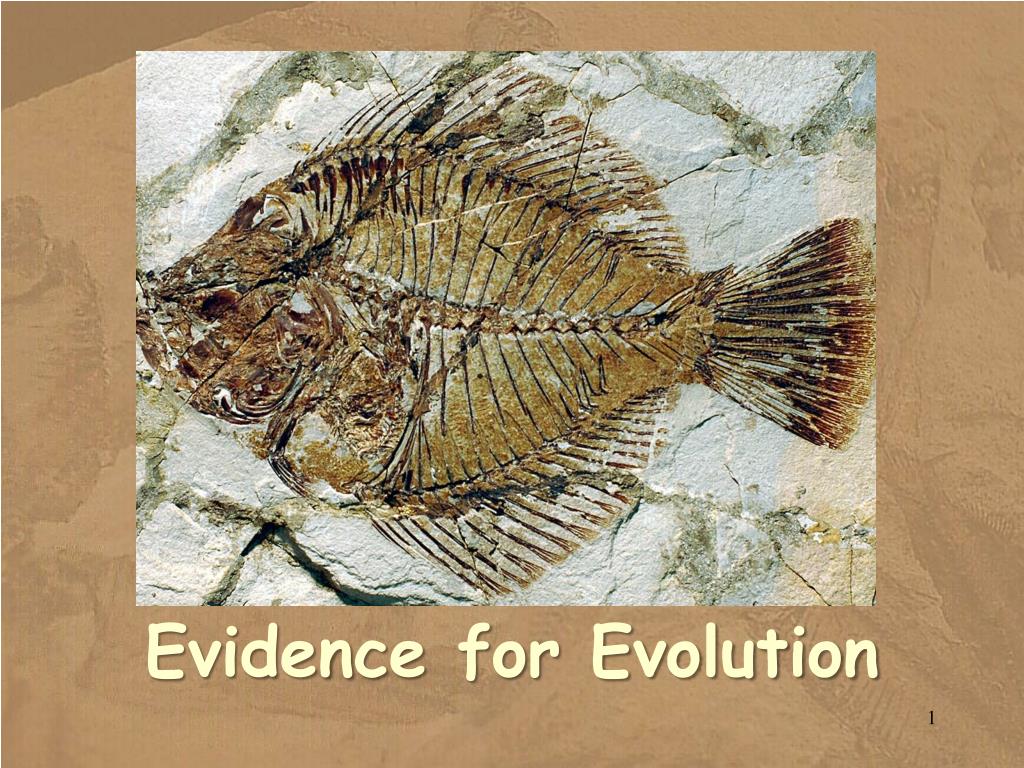
Evidence for Evolution. Evidence. Evidence of common ancestry among species comes from many sources. #1 Fossil Evidence. Fossils Earth is Millions of years old! Fossils in older layers are more primitive than those in the upper layers. Extinct Fossils resemble modern animals .
Evidence for Evolution - slide 1
01 / 23Evidence for Evolution
1 / 17

Télécharger la présentation

Evidence for Evolution
Une image / un lien ci-dessous est fourni (tel quel) pour télécharger la présentation

Politique de téléchargement : le contenu du site vous est fourni TEL QUEL pour votre information et votre usage personnel ; il ne peut être vendu, concédé sous licence ni partagé sur d’autres sites sans l’accord de son auteur.Le contenu vous est fourni TEL QUEL, pour votre information et votre usage personnel uniquement. Téléchargez la présentation en cliquant sur ce lien. Lors du téléchargement, si vous ne parvenez pas à télécharger une présentation, l’éditeur a peut-être supprimé le fichier de son serveur.Pendant le téléchargement, si vous ne parvenez pas à obtenir une présentation, le fichier a peut-être été supprimé par l’éditeur.

F I N

Plus de contenu associé

Transcription de la présentation
  1. Evidence for Evolution

  2. Evidence Evidenceof common ancestry among species comes from many sources.

  3. #1 Fossil Evidence • Fossils • Earth is Millions of years old! • Fossils in older layers are more primitive than those in the upper layers. • Extinct Fossils resemble modern animals. • This shows a common ancestry.

  4. Types of Fossils • Permineralizationoccurs when minerals carried by water are deposited around a hard structure • A natural cast forms when flowing water removes all of the original tissue, leaving an impression.

  5. Types of Fossils • Amber-preserved fossils are organisms that become trapped in tree resin that hardens after the tree is buried. • Fossilized insects

  6. Types of Fossils • Impressionsare imprints left in rock • Preserved remains form when an entire organism becomes encased in material such as ice, ash, tar …

  7. Dating Fossils

  8. Relative Dating of Fossils • Estimates the time during which an organism lived • It compares the placementof fossils in layers of rock • Scientists infer the order in which species existed

  9. Radiometric Dating of Fossils • Measures the half-life of the isotope – the time it takes for ½ of the isotope to break down • Carbon-12stable; Carbon-14 radioactive (carbon in ALL organisms) • Example: • Carbon-14 has a half-life of 5730 years; decays into Carbon-12 • Compare ratio of C-14 to C-12 to age fossil

  10. Radiometric Dating of Fossils • Uses Radioactive Isotopes: atoms of the same element with differing neutrons • Example: • 12C and 14C • 12C = 6 protons + 6 neutrons • 14C = 6 protons + 8 neutrons

  11. Radiometric Dating of Fossils

  12. #2 Geographical Distribution • Geography & environment gives evidence for evolution • Island species most closely resemble nearest mainland species • Populations can show variation from one island to another

  13. Larva Adultbarnacle Adult crab #3 Embryology • Embryo (early developmental stage) gives evidence of evolution • Identical larvae, different adult body forms • Similar embryos, related but diverse organisms • Showscommonancestry

  14. #3 Embryology Vertebrates all share gill slits and a tail in their early embryo stage; Share a common ancestor

  15. #4 Comparative Anatomy • The study of anatomy provides evidence of evolution • Homologousstructures are similar in structure but different in function. • Homologous structures ARE EVIDENCE of a common ancestor.

  16. Homologous Structures ARM LEG Wing Flipper grasping walking swimming flight

  17. #4 Comparative Anatomy • Analogousstructures are similar in function but differ in structure • Analogous structures DO NOT show common ancestry Fly wing Bat wing

  18. Structural patterns are clues to the history of a species. • Vestigial structures are remnants of organs or structures that had a function in an early ancestor. • Examples include ostrich wings, human appendix, and wisdom teeth, whale and snake pelvis/hind legs

  19. Pythons have tiny femurs (leg bone)

  20. #5 Molecular and Genetic Evidence • AKA Biochemical Evidence • Two closely-related organisms will have similar DNA, RNA, and protein (amino acid) sequences. • This also gives evidence of a common ancestor.

  21. Five examples of Evidence for Evolution • Fossils • Geographical Distribution • Embryology • Comparative Anatomy • Molecular and Genetic