Fascinating Facts About Birds: Nature's Feathered Wonders
60 likes | 196 Vues
Discover the incredible world of birds! From their diverse shapes, sizes, and colors to the unique characteristics they share, this guide explores the fascinating elements of avian life. Learn about the variety of bird eggs, the purpose of their beaks, and the importance of feathers for warmth and flight. Understand how birds are equipped with hollow bones to facilitate flying and how their beaks are adeptly suited for their diet. Join us in appreciating the beauty and diversity of these remarkable creatures that captivate nature lovers around the globe.


Fascinating Facts About Birds: Nature's Feathered Wonders
E N D
Presentation Transcript
Birds’ Facts Together With Birds
Bird Eggs • Bird’s eggs are all different colours and sizes. Some are almost round , others have a pointed end.
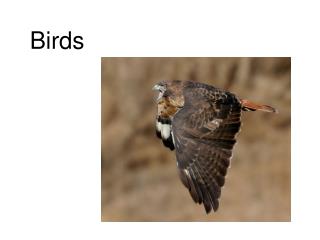
What’s a bird? • There are thousands of sorts of birds of all shapes, sizes and colours. They have these things in common. • All birds are covered with feathers. • All birds have two wings, but they can’t all fly. • All birds have a tail. It is used for steering in flight. • All birds have two legs and feet with toes. • All birds have a hard beak. • All female birds lay eggs. • Birds fly by flapping their wings up and down. • Birds’ bones are hollow and full of air. This makes them light enough to fly.
BEAKS • Birds have hard beaks instead of teeth. A bird’s beak suits the food it eats. • Seed eaters have short, tough beaks. • Insect eaters have thin, pointed beaks. • Wading birds have long beaks for grabbing worms and other animals out of mud. • Birds of prey have strong, hooked beaks for tearing meat. • Nectar eaters have very long, thin beaks to reach inside flowers. • Some birds have tweezer beaks. They are pointed for picking up seeds and long enough to grasp worms. • Ducks have flattened beaks for filtering food from water.
FEATHERS • Feathers keep birds warm and dry.They help them to fly.
Prepared By ReemNiaz, RemeeshaAzfar, Shazia, Khalud