Client-Side Includes: Fast Access to Dynamic Content
This overview discusses advanced client-side techniques for efficient dynamic content delivery using the open ESI language. It highlights features such as fast access to dynamic content, exception handling, and conditional inclusion of fragments. The method prioritizes variable substitution and downloads only changed fragments to optimize performance. By reassembling pages in the browser without modifications, it significantly enhances user experience, reduces bandwidth consumption, and lowers content delivery costs for providers.

Client-Side Includes: Fast Access to Dynamic Content
E N D
Presentation Transcript
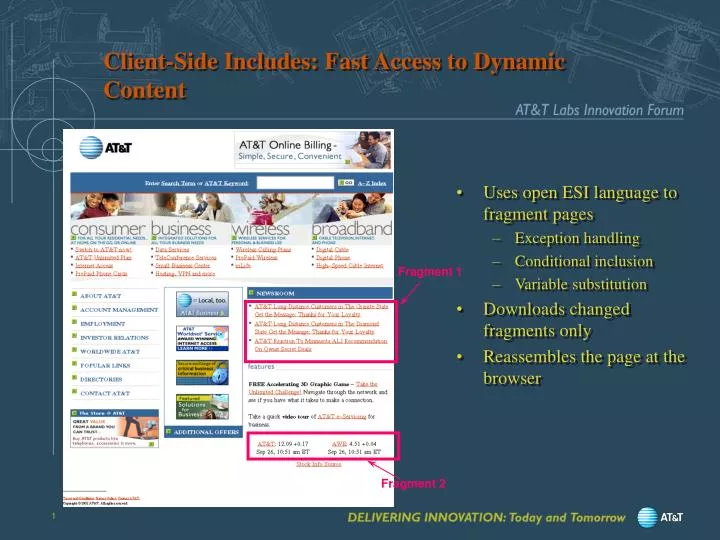
Fragment 1 Fragment 2 Client-Side Includes: Fast Access to Dynamic Content • Uses open ESI language to fragment pages • Exception handling • Conditional inclusion • Variable substitution • Downloads changed fragments only • Reassembles the page at the browser
Improved Performance Browser Edge server Origin server GET /index.html GET /index.html No ESI: full page full page Page reassembly GET /index.html GET /frag2.html ESI: frag2 full page (Boilerplate, frag1 cached) Page reassembly GET /frag2.html GET /frag2.html CSI: frag2 frag2 (Boilerplate, frag1 cached)
GET CSI Javascript (cacheable, same for all pages) Obtain fragments using ActiveX Obtain fragments Using HTTP Implementation Browser Edge server Origin server GET /home.html wrapper (cacheable, immutable for given page) Typically satisfied from client’s cache
Benefits • Improves user experiences. • Reduces amount of content transferred over the last mile • No browser modifications or reconfiguration • Reduces total cost for content providers by: • Reducing bandwidth consumption of origin server • reducing amount of content served by CDN’s edge servers