Understanding Prokaryotes: Classification, Structure, Reproduction, and Role in Disease
Prokaryotes, including bacteria, are microscopic organisms that play essential roles in ecosystems and human health. This overview delves into the classification of bacteria, highlighting eubacteria and archaebacteria, including their diverse nutritional strategies such as heterotrophy and autotrophy. We explore their unique shapes and reproductive methods, primarily focusing on asexual reproduction through binary fission and genetic exchange via conjugation. Additionally, we examine the significance of bacteria in disease, highlighting their impact on both human health and the environment.

Understanding Prokaryotes: Classification, Structure, Reproduction, and Role in Disease
E N D
Presentation Transcript
Prokaryotes Classification, Structure, Reproduction, Importance, and Disease
Bacteria are smaller than you think. Bacteria on the head of a pin.
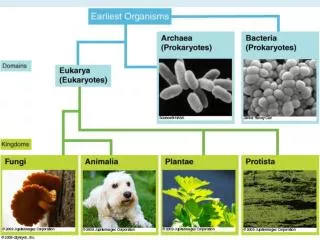
Eubacteria • Heterotrophs – eat organic molecules (like you) • Autotrophs – make their own food through photosynthesis • Chemosynthetic Autotrophs – break down inorganic matter for energy
Archaebacteria • Methanogens – live without oxygen and produce methane • Extremophiles • Halophiles – salt loving • Thermophiles – heat loving • Acidophiles – acid loving • Alkaliphiles – base loving
Reproduction • Asexual or binary fission – Bacteria (generally) have one chromosome and several plasmids (circular pieces of DNA). Bacteria copy their chromosome, move each copy to opposite ends, and finally divide in half. • Sexual or conjugation – A bacterium can transfer part or all of their chromosome to another bacterium through pili.