Download
1 / 45
450 likes | 569 Vues
This chapter covers critical aspects of infection control in healthcare settings, focusing on the transmission and prevention of bloodborne pathogens, including Hepatitis B, Hepatitis C, and HIV. It emphasizes the importance of maintaining a sterile environment, implementing safe practices like handwashing, and using protective equipment. Various modes of transmission are discussed, along with signs, symptoms, and the significance of vaccinations. Understanding the infection cycle and how to break the chain of infection is essential for protecting both healthcare workers and patients from potential infections.

E N D
Chapter 11 Infection Control
overview • Bloodborne pathogens are transmitted through contact with blood or other bodily fluids. • Hepatitis B and the Human Immunodeficiency Virus are of serious concern.
overview • A heath care facility must be maintained as clean and sterile to prevent the spread of disease and infection. • Precautions must be made to minimize the risk of transmission.
bloodborne pathogens • Pathogenic microorganisms that can potentially cause disease • Transmitted by human blood, semen, vaginal secretions, CSF, & synovial fluid
bloodborne pathogens • Three main concerns: • HBV, HCV, and HIV • Additional viruses • HAV, HDV, HEV • Make host cells ill by reducing cellular activity • Redirect cell activity to create more viruses
Hepatitis b virus • Signs and Symptoms • Swelling, soreness, & loss of normal liver function • Flu-like symptoms, abdominal pain, fever, headache, jaundice • May test positive 2-6 weeks after symptoms develop • 85% recover in 6 to 8 weeks
Hepatitis b virus • Prevention • Good personal hygiene • Avoid high risk activities • Virus may survive 7 dayson contaminated surfaces • Management • Vaccination – required for AHC • 3 dose vaccination over 6 months
Hepatitis C virus • Acute and chronic liver disease • Most common chronic bloodborne infection in USA • Signs & Symptoms • ~80% do NOT have signs and symptoms • Jaundiced, abdominal pain, nausea, loss of appetite, joint/muscle pain, fatigue, dark urine
Hepatitis C virus • Prevention • Spread through contact w/ infected blood • Usually needles or tools with blood on them • Rarely through sexual contact • Management • No vaccine; drug management
Human immunodeficiency virus • Signs & Symptoms • Fatigue, weight loss, muscle/joint pain, painful or swollen glands, night sweats, fever • May not develop symptoms for up to 8-10 years • Will eventually develop AIDS
Human immunodeficiency virus • Management • No vaccine, but there are drugtherapies • Prevention • Safe-sex choices • Avoid body fluids & sharing needles
Disease transmission • Athletics involve skin-to-skin contact • Some can cause breaks in the skin • Lacerations • Abrasions • Punctures • Limited risk of on-field transmission of HIV • Est. risk in football <1:1,000,000 games
Disease transmission • Some sports may have higher risk • Boxing, wrestling, rugby, martial arts • Basketball, football, hockey, soccer • Non-contact sports have lowest risk
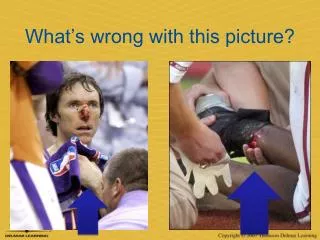
But… • The risk of transmitting a disease exists • Must be aware of surroundings • Know the chain of infection
Chain of infection pathogen
The Infection Cycle • Infection cycle: chain of events allowing a pathogen to infect a host: • Pathogen is present • Reservoir host • Portal of exit • Route of transmission • Portal of entry • Susceptible host
Breaking the chain • The spread of disease can be stopped by removing any link in the chain • Two ways to remove a link • Kill the bacteria before it enters the host • Change the environment the bacteria lives in • Moist dry • Increase temperature
Help Prevent the Spread of Infection! • Wash hands frequently • Wear gloves and other protective clothing • Gowns, goggles, and masks • Exposure to blood or other body fluids exists • Working with clients who may be infectious
Help Prevent the Spread of Infection! • Keep your immunizations up-to-date • Especially hepatitis vaccinations
Breaking the Chain pathogen
Medical Asepsis(Clean Technique) • Practices and procedures designed to ensure a clean environment • Removing or destroying disease-causing microorganisms
Handwashing:The Key to Medical Asepsis • Handwashing is done at the following times: • When first arriving at work • Before performing each procedure on a client • During a procedure if hands become contaminated
Handwashing:The Key to Medical Asepsis • Handwashing is done at the following times: • Between each client when a procedure is performed • After using the restroom • After removing gloves from your hands • Before eating
Universal precautions • Use Personal Precautions • Wash hand & skin surfaces • Proper Hand Washing
Using Gloves • The athletic trainer: • Should always wear gloves whenever blood or body fluids are present • Even when the potential for such fluids are present, gloves must be worn
Universal precautions • Use Personal Precautions • Extreme care must be used with glove removal • Glove Removal
Contaminated Sharps • A serious risk exists when punctured by a needle or other sharp object • Dispose of all needles, scalpel blades, and other sharp objects in the proper puncture-resistant container
Reducing the Risk of Puncture Wounds • Never recap, bend, or manually remove a dirty needle • Always deposit the entire syringe and needle or sharp object in puncture-resistant container
Reducing the Risk of Puncture Wounds • Immediately clean a puncture wound with alcohol and Betadine and cover the wound • Report this to your supervisor
Reducing the Risk of Puncture Wounds • Never carry needles or sharp objects from one location to another with the tips pointing toward other people or yourself • Point them toward the floor
The Risk of Hepatitis • Handwashing is critical for reducing hepatitis spread • Often transmitted through the fecal-oral route due to not washing one’s hands after using the bathroom
AIDS • Incurable (at present) disease • Great care must be taken to avoid contact with this virus • Wash hands • Wear protective eyewear, gloves, and a mask to prevent exposure to splattering blood or other body fluids
Universal Precautions • Health care workers must be familiar with these precautions: • Wear gloves when one has contact with blood, body secretions, or broken skin • Do not reuse gloves
Universal Precautions • Health care workers must be familiar with these precautions: • Wear protective eyewear and a mask during any procedures that may expose you to splattering blood or other body fluids
Universal Precautions • Health care workers must be familiar with these precautions: • Wear disposable gowns if blood or body fluids may splatter • Thoroughly wash hands and other skin surfaces immediately following contamination
Universal Precautions • Health care workers must be completely familiar with these precautions: • Avoid giving direct mouth-to-mouth resuscitation • Use mouth-to-mask method, resuscitator bags, and other available equipment
Universal Precautions • Health care workers must be completely familiar with these precautions: • Keep an airway nearby when working in a health care environment • Avoid direct patient contact if you have open wounds or other skin conditions
Universal Precautions • Healthcare workers must be completely familiar with these precautions: • Wash your hands after each patient contact and after removing gloves • Carefully dispose of all sharp objects in appropriate puncture-resistant containers
Body Secretions for which Standard Precautions Are Used • Urine • Sputum • Fecal material • Wound drainage • Semen • Vaginal secretions
Body Secretions for which Standard Precautions Are Used • Tissues • Synovial fluid • Around a joint • Cerebrospinal fluid • Around brain and spinal cord
Body Secretions for which Standard Precautions Are Used • Pleural fluid • Lung • Peritoneal fluid • Abdominal cavity • Pericardial fluid • Around the heart • Amniotic fluid
Universal precautions • Protect Coaches & ATs • Policy for OSHA training • Purchase proper supplies • Protect Athletes • Use mouthpieces in high-risk sports • Shower immediately • Immunizations • Postexposure Procedures • Confidential medical evaluation
Take home message… • Minimize risks by not eating/drinking, applying cosmetics/lip balm, handling contact lenses, and touching face before washing hands in athletic training room