The Impact of World War I on Progressive America: Social Changes and Political Decisions (1917-1920)
This chapter explores the transformative effects of World War I on American society and the Progressive movement from 1917 to 1920. As the war prompted government expansions, social changes, and heightened tensions around civil liberties, the Progressive ideals clashed with wartime policies. Key topics include the role of women and African Americans, the push for the Nineteenth Amendment, and the repression of dissent through the Espionage and Sedition Acts. The chapter also examines President Wilson's vision for peace and the failure of the Treaty of Versailles, highlighting the complexities of democracy during wartime.

The Impact of World War I on Progressive America: Social Changes and Political Decisions (1917-1920)
E N D
Presentation Transcript
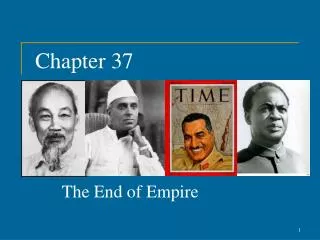
Chapter 37 Over Here: World War I at Home 1917–1920
The Progressive War • World War I • Make “world safe for democracy” • “War to end all wars” • Progressives turn ideas into policy • War kills progressive movement • Progressive split over intervention • Democratic progressives support war • See war as opportunity to pass more reform • Government takes control of economy
Progressive War (cont.’d) • Planned economy • Size of government mushrooms • The Shipping Board • United Railway Administration • William McAdoo • War Industries Board • Herbert Hoover • Heads Food Administration • Very successful; engineer’s approach • Uses voluntary cooperation and rationing • Provides incentives for farmers • Managing people • Selective Service Act • Some deferment by occupation • Use local draft boards • Some conscientious objectors
Social Changes • Labor • AFL cooperates with government • Gompers serves on War Industries Board • AFL agrees to no strikes during war • AFL grow with government support • Blacks in Wartime • Many serve loyally in military • Hope to gain more rights • Armed forces still segregated • Some are commissioned as officers
Social Changes (cont.’d) • Race riots at home • Blacks migrate to the north • Seek jobs in war industries • Young most likely to migrate • Race riots erupt in cities • Women in war • Women serve in armed forces • Serve in non-combatant positions • More women in factory jobs • Women organize support groups
Social Changes (cont.’d) • Voting at last • Aggressive Women’s Party demonstrates • Moderates promise cooperation in return for vote • Wilson supports woman suffrage • Nineteenth Amendment passes 1919 • The Moral War • Prior to war prohibition making few gains • Need to conserve grain gains support for prohibition • Eighteenth Amendment passes • Progressives use war to improve morality • Troops receive lectures on dangers of prostitution • Some red-light districts closed • Prostitution continues
Conformity and Repression • Socialists • Oppose war • Government acts against Socialists • Congress refuses seat to Berger • Debs imprisoned for anti-draft speech • Industrial Workers of the World (IWW) • Did not strongly oppose war • Union too successful for government • Vigilante terrorism used against IWW • Government action taken against IWW
Conformity and Repression (cont.’d) • Civil Liberties • Espionage Act of 1917 • Sedition Act of 1918 • Schenck v. the United States • Free speech impaired by war • Propaganda • Committee on Public Information • German culture, people depicted as evil • Massive propaganda campaign • Persecution of German-Americans • Some German persecution harmless • Names of dog breeds, foods, towns • Many German Americans lose jobs • Vigilante groups terrorized German Americans • Little protection from law enforcement
Wilson and the League of Nations • Fourteen Points • Treat Germany fairly • National self-determination • Freedom of the seas, disarmament • League of Nations • Wilson’s obsession • Wilson attends peace conference • Refuses to take leading Republicans • Believes Europe agrees with Fourteen Points • Clemenceau of France wants revenge • Lloyd George of Britain wants revenge • Orlando of Italy wants territory • Only Wilson committed to Fourteen Points
Wilson and the League of Nations (cont.’d) • Wilson must compromise • Treaty harsh against Germany • Little national self-determination • League of Nations is in treaty • Article 10 (League of Nations) • Republicans oppose treaty • Fear League of Nations • Afraid U.S. will lose sovereignty • Republicans led by Henry Cabot Lodge
Wilson and the League of Nations (cont.’d) • Fight for the League • Lodge buys time in committee • Wilson takes case to people • Wilson falls ill on tour • Wilson suffers a stroke • Wilson out of public eye for six weeks • Wife manages who sees president • Wilson refuses to compromise • Congress does not ratify treaty
Wilson and the League of Nations (cont.’d) • Election of 1920 • Wilson’s last hope for ratification of treaty • Democrats run James M. Cox • Republicans run Warren G. Harding • The Great Bloviator • Harding waffles on treaty • Promises America normalcy • Americans lose interest in treaty • Harding wins easily
Discussion Questions • Did the Great War end the progressive movement? Is there any trace of true progressivism today? • What role did Black Americans play in the Great War? Did conditions changes for them upon their return to the United States? • How were American civil liberties curtailed during the Great War? Were particular groups targeted? • For what reasons did the United States not ratify the Treaty of Versailles?