Download
1 / 7
70 likes | 199 Vues
Cost accounting is a managerial accounting practice aimed at helping managers identify, measure, and control operating costs. Key components include materials, which can be direct or indirect, depending on their role in production. Direct labor refers to identifiable work related to specific products, while indirect labor encompasses costs not directly tied to production. Additionally, overheads represent the indirect costs of running a business, covering expenses like maintenance and depreciation. Understanding these elements is crucial for effective financial management.

E N D
CostAccouting L.C.P. Martha Yolanda PancardoCortazar
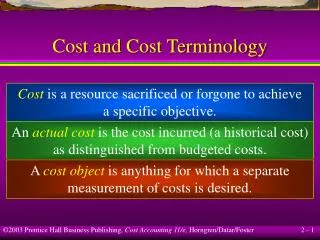
COST ACCOUNTING Is a managerial accounting activity designed to help managers identify, measure, and control operating costs.
Material MATERIALS are physical goods (and their cost) used in the manufacture of a product, often separated into DIRECT MATERIAL (that which goes directly into the product such as cream into ice cream, or steel into cars) and INDIRECT MATERIAL (that which is used in maintaining the manufacturing environment such as cleaning fluids or oil for lubrication of manufacturing equipment). Indirect materials are usually part of the overhead component of cost. The term material, when used without the direct or indirect qualifier, usually refers to direct materials.
Direct labor DIRECT LABOR is work performed by individuals which is directly related to a specific cost objective. This work is readily identifiable with a particular product or service.
Indirect labor. Costs which are not directly related to the making of a product, e.g. cleaning, rent or administration
Overheads The indirect costs of the day-to-day running of a business, i.e. not money spent of producing goods, but money spent on such things as renting or maintaining buildings and machinery. Example: Depreciation. Maintenance
Cash Balance • A balance that represents cash alone, as distinct from a balance that includes money owed but as yet unpaid