Understanding Biomes: Characteristics, Types, and Ecosystem Interactions
A biome is a large geographic area defined by its characteristic climate, abiotic factors, and distinct ecosystems. Classified as terrestrial or aquatic, biomes include various land ecosystems such as deserts, tundras, grasslands, forests, and rainforests, as well as aquatic environments like saltwater and freshwater. Each biome supports unique communities of flora and fauna, adapted to their respective conditions. This overview highlights the defining features, threats, and organisms present in various biomes, emphasizing their ecological significance.


Understanding Biomes: Characteristics, Types, and Ecosystem Interactions
E N D
Presentation Transcript
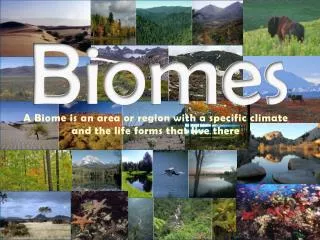
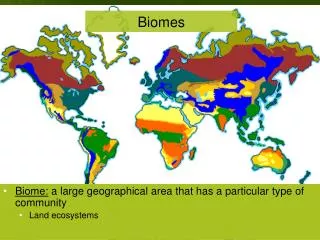
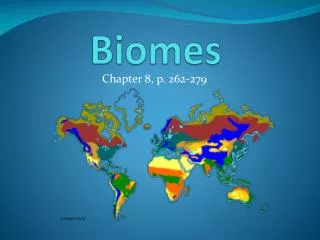
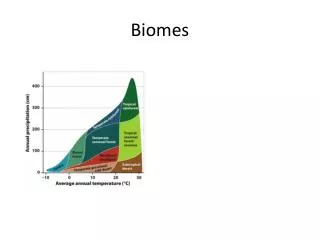
Biomes • A biome is a large geographic area with a characteristic climate. A biome consists of several communities / ecosystems. Part of the earth that has more or less the same kind of abiotic and biotic factors spread over a large area thus creating a typical ecosystem over that area. • Biomes can be classified as terrestrial or aquatic.
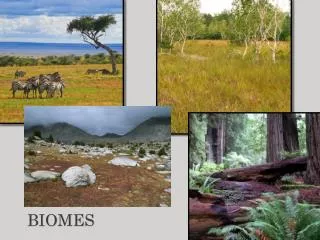
Land Biomes • Desert • Tundra • Grassland (shrubland) • Forest • Deciduous Forest • Rainforest • Taiga (Boreal forests)
Tundra • Found in Northern Hemisphere • Very short growing season • Permafrost restricts root growth • Reason why has only small plants • Plants • Mosses, lichens, no trees • Animals • Lemmings, arctic fox, snowy owl, caribou
Grasslands (Shrubland) • Grass • Threat = agriculture, manmade fires • Plants • Grazing adapted • Woody plants, trees and shrubs • Animals • Bison, giraffe, prairie dogs
Desert • Sand and low precipitation • Plants • Drought and salt resistant • Spiny and succulent (cactus) • Animals • Kangaroo rat, lizards
Forest - Taiga (Boreal) • High northern latitudes below Tundra • Largest terrestrial biome • Plants • Evergreens, conifers (spruce, fir and pine) • Short roots, cone shape • Animals • Moose, lynx, Snowshoe hare
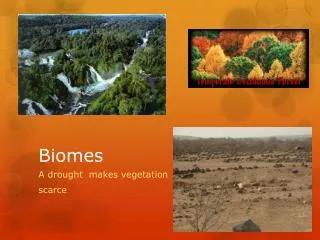
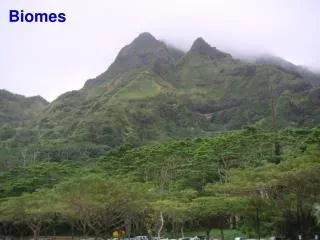
Deciduous Forest • Rich soils = productive area • Trees lose leaves every year • Can keep water in winter • Plants • Broadleaf are seasonal • Maple, Oak • Animals • Deer, Blackbear
Rainforest • High rainfall • Divided into layers • Rapid decomposition gives nutrients to plants • Plants • Animals
Water Biomes • Saltwater • Freshwater
Saltwater • Oceans, some lakes and marshlands • Abiotic factors: waters and sunlight • Plants • Kelp • Eeelgrass • Animals • Sea otters • Coat and kelp leaves • orca (killer whale) • Colors blend into ocean (dark top and light bottom)
Freshwater • Feshwater (slow flowing rivers, lakes and ponds) • Wetlands (Bogs, swamps, and marshland) • Video: Aliant learning- Habitats and Biomes: Ecosystems of the World