Genetic Interactions: Dominance, Expression, and Environmental Influences
Chapter 5 delves into the intricate world of genetics, focusing on how gene interactions at the same and different loci influence phenotypes. It explores dominance, penetrance, expressivity, and the role of lethal alleles, alongside the significance of multiple alleles in creating genetic diversity. The chapter further discusses how sex influences inheritance patterns, the phenomenon of anticipation in traits across generations, and environmental effects on genotype expression. This comprehensive overview of genetic principles forms the foundation for understanding complex traits in organisms.

Genetic Interactions: Dominance, Expression, and Environmental Influences
E N D
Presentation Transcript
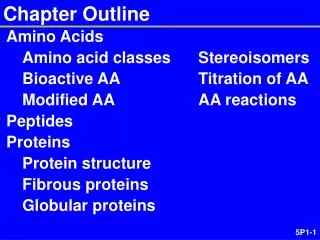
Chapter 5 Outline • 5.1 Dominance Is Interaction between Genes at the Same Locus, 100 • 5.2 Penetrance and Expressivity Describe How Genes Are Expressed as Phenotype, 102 • 5.3 Lethal Alleles May Alter Phenotypic Ratios, 103 • 5.4 Multiple Alleles at a Locus Create a Greater Variety of Genotypes and Phenotypes than Do Two Alleles, 103
Chapter 5 Outline • 5.5 Gene Interaction Occurs When Genes at Multiple Loci Determine a Single Phenotype, 105 • 5.6 Sex Influences the Inheritance and Expression of Genes in a Variety of Ways, 114 • 5.7 Anticipation Is the Stronger or Earlier Expression of Traits in Succeeding Generations, 122 • 5.8 The Expression of a Genotype May Be Influenced by Environmental Effects, 122
5.1 Dominance Is Interaction between Genes at the Same Locus • Genes at the same locus – two versions of the same gene; each version of the same gene is defined as allele.
5.1 Dominance Is Interaction between Genes at the Same Locus • Incomplete dominance • Codominance
5.2 Penetrance and Expressivity Describe How Genes Are Expressed as Phenotype • Penetrance: percentage of individuals having a particular genotype that express the expected phenotype • Expressivity: the degree to which a character is expressed
5.3 Lethal Alleles May Alter Phenotypic Ratios • A lethal allele: causes death at an early stage of development, and so some genotypes may not appear among the progeny
More than 2 alleles at a locus Relationship between allele pairs determines outcome Could be exhibited as dominant/recessive relationship as in duck feathers Could be exhibited in codominance as in ABO blood type
5.4 Multiple Alleles at a Locus Create a Greater Variety of Genotypes and Phenotypes than Do Two Alleles • ABO blood group
5.5 Gene Interaction Occurs When Genes at Multiple Loci Determine a Single Phenotype • Gene interaction: Effects of genes at one locus depend on the presence of genes at other loci. • Gene interaction that produces novel phenotypes
5.5 Gene Interaction Occurs When Genes at Multiple Loci Determine a Single Phenotype • Gene interaction with epistasis • Epistasis: One gene masks the effect of another gene. • Recessive epistasis
5.5 Gene Interaction Occurs When Genes at Multiple Loci Determine a Single Phenotype • Dominant epistasis
5.5 Gene Interaction Occurs When Genes at Multiple Loci Determine a Single Phenotype • Duplicate recessive epistasis
5.5 Gene Interaction Occurs When Genes at Multiple Loci Determine a Single Phenotype • Complementation: determines whether mutations are at the same locus or at different loci • The complex genetics of coat color in dogs: • Agouti (A) locus • Black (B) locus • Extension (E) locus • Spotting (S) locus
5.6 Sex Influences the Inheritance and Expression of Genes in a Variety of Ways • Sex-influenced and sex-limited characteristics
Sex-influenced and sex-limited characteristics • Sex-influenced characteristics
Sex-influenced and sex-limited characteristics • Sex-limited characteristics
Sex-influenced and sex-limited characteristics • Cytoplasmic inheritance
Sex-influenced and sex-limited characteristics • Genetic maternal effect
Sex-influenced and sex-limited characteristics • Genomic imprinting: differential expression of genetic material depending on whether it is inherited from the male or female parent • Epigenetics: phenomena due to alterations to DNA that do not include changes in the base sequence; often affects the way in which the DNA sequences are expressed
5.7 Anticipation Is the Stronger or Earlier Expression of Traits in Succeeding Generations • Anticipation: A genetic trait becomes more strongly expressed or is expressed at an earlier stage as it is passed from generation to generation.
5.8 The Expression of a Genotype May Be Influenced by Environmental Effects • Temperature-sensitive allele: an allele whose product is functional only at a certain temperature