Impressionism and beyond
This overview captures the transformative journey of modern thought in the art world, centering on Impressionism's desire to portray life realistically while capturing the artist's personal impressions. Key characteristics of Impressionist art, such as the use of light, vibrant colors, and visible brush strokes, are explored, alongside prominent figures like Claude Monet, Mary Cassatt, and Edgar Degas. Additionally, the text discusses the evolution into Post-Impressionism, Cubism, and Surrealism, highlighting influential artists such as Vincent van Gogh and Pablo Picasso.

Impressionism and beyond
E N D
Presentation Transcript
Ch. 24—The Birth of Modern Thought Impressionism and beyond
Realism Modernism Desire to portray life realistically Without romantic interpretation Questioned Middle Class society Literary movements—late 19th century
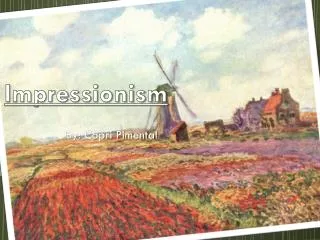
1840’s-1880’s Revolted against Realism Did not want to present a “photographic” accurate reality Wanted to show the artist’s “impressions” of the subject Tried to show personal feelings impressionism
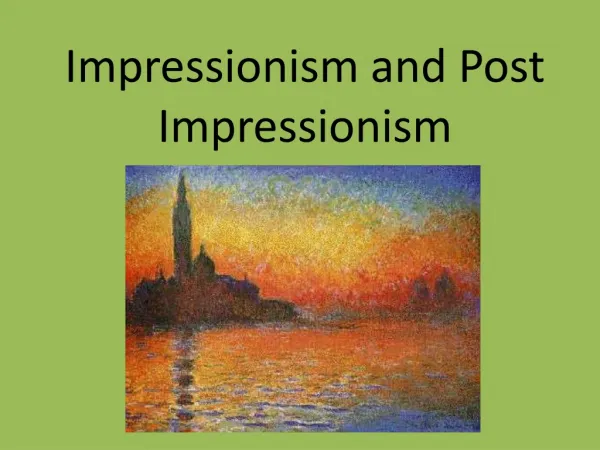
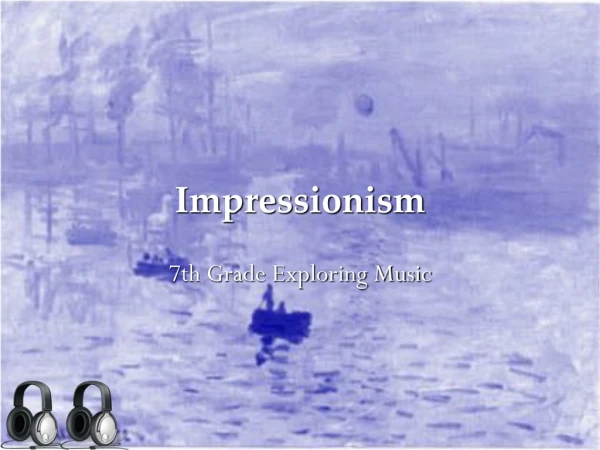
Characteristics of Impressionist art: • Use of light • Brilliant colors • Visible brush strokes • Represented everyday life • Often outdoor scenes impressionism Claude Monet, Impression, Sunrise
Based in Paris • Most Impressionist were French • Most were men • Famous Impressionist women—Mary Cassatt (American) and Berthe Morisot (French) impressionism A self portrait of Mary Cassatt Painting of Morisot by EdouardManet
EdouardManet, Pierre-Auguste Renoir, Claude Monet, Edgar Degas Famous impressionists
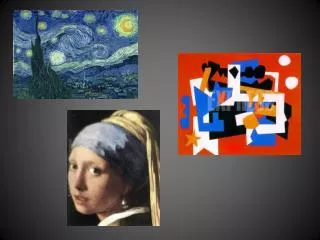
Post-Impressionism—Vincent van Gogh, Henri Toulouse-Lautrec Pointilism—Georges Seurat Cubism(1890’s-1920’s)—Pablo Picasso Surrealism (post WWI-1940’s)—Salvador Dali Movements after impressionism