Download
1 / 8
90 likes | 210 Vues
Greece's geography, characterized by its mountainous terrain and extensive coastlines, profoundly influenced its ancient civilization. The mainland is a rugged peninsula, surrounded by the Mediterranean, Ionian, and Aegean Seas, with numerous islands dotting the landscape. Limited flat areas for farming led the Greeks to establish settlements in coastal and river valley regions. Isolated by mountains and seas, these communities developed their own governments and cultures, despite sharing a common language. The mastery of shipbuilding and navigation enabled trade and cultural exchanges across the seas, shaping Greek society.

E N D
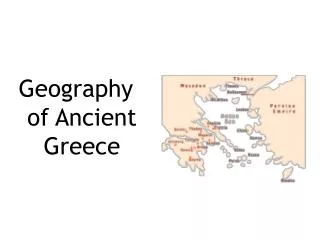
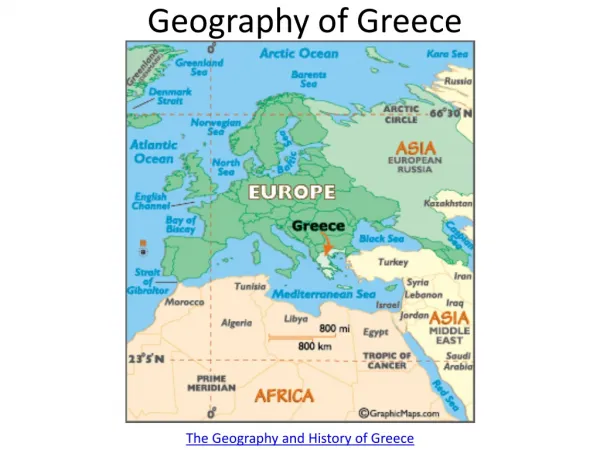
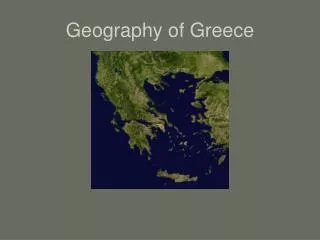
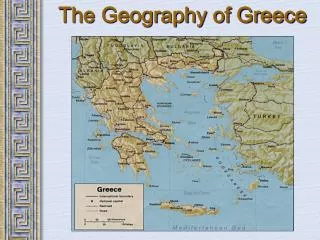
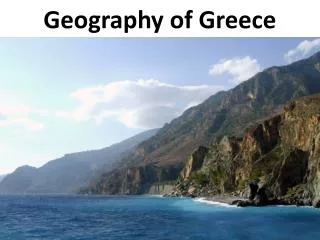
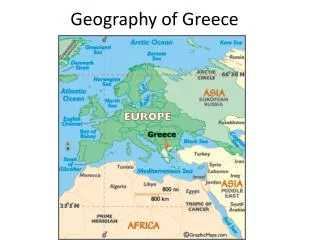
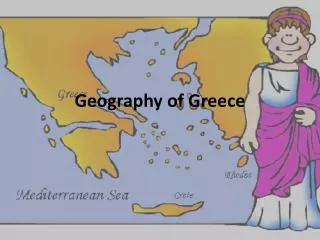
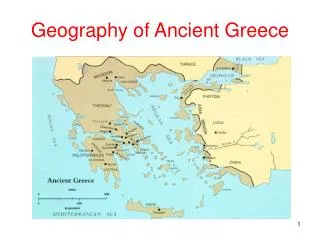
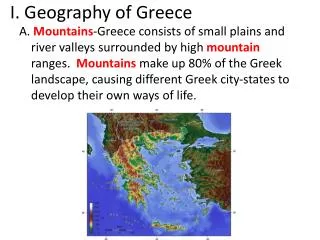
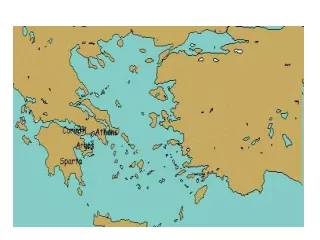
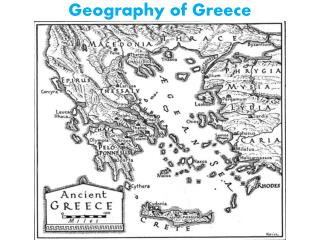
Geography Shapes Greek Civilization The Greeks lived on rocky, mountainous lands surrounded by water. The mainland of Greece is a peninsula, an area of land that is surrounded on three sides by water. But the Greek peninsula is very irregular. It’s one big peninsula made up of a series of smaller peninsulas. The land and sea intertwine like your hand and fingers in a bowl of water. In addition, there are many islands. Look at the map of Greece and notice the rugged coastline.
Mountains and Settlements Because mountains cover much of Greece, there are few flat areas for farmland. People settled in those flat areas along the coast and in river valleys. They lived in villages and towns separated by mountains and seas.
Travel across the mountains and seas was difficult, so communities were isolated from one another. As a result, the people created their own governments and ways of life. Even though they spoke the same language, Greek communities saw themselves as separate countries.
Seas and Ships Since travel inland across the rugged mountains was so difficult, the early Greeks turned to the seas. On the south was the huge Mediterranean Sea, to the west was the Ionian (eye-OH-nee-uhn)Sea, and to the east was the Aegean (ee-JEE-uhn) Sea. It’s not surprising that the early Greeks used the sea as a source for food and as a way of trading with other communities.
The Greeks became skilled shipbuilders and sailors. Their ships sailed to Asia Minor (present-day Turkey), to Egypt, and to the islands of the Mediterranean and Aegean seas. As they traveled around these seas, they found sources of food and other products they needed. They also exchanged ideas with other cultures.