Enhancing Job Design for Improved Performance and Satisfaction
This summary explores key concepts in job design as outlined in "Job Design Overview." It emphasizes the importance of core job characteristics, such as skill variety, task significance, and autonomy, which enhance employee motivation and performance. Techniques like job enrichment and enlargement, grounded in Hackman and Oldham's model, promote increased responsibility and decision-making capabilities. A focus on feedback, engagement, and empowerment fosters a positive work environment, ultimately reducing absenteeism and turnover while enhancing job satisfaction and organizational success.

Enhancing Job Design for Improved Performance and Satisfaction
E N D
Presentation Transcript
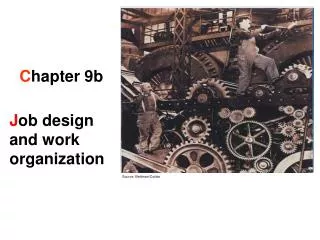
Chapter 9b Jobdesign and work organization Source: Bettman/Corbis
Task - 20 mins 1 Review the article “ Job Design Overview ” and produce a summary of the major points you feel it raises.
Performance and personal outcomes Techniques of job design Core job characteristics Mental states Combining Skill variety Experienced meaningfulness of the work High internal work motivation tasks Forming natural Task identity work units High quality work performance Experienced responsibility for outcomes of the work Establishing Task significance client relationships High satisfaction with the work Autonomy Vertical loading Knowledge of the actual results of the work activity Low absenteeism and turnover Opening Feedback feedback channels Behavioural approaches – Hackman and Oldham’s model of job design
Job enrichment Job enlargement Behavioural approaches – Job enlargement and enrichment More tasks which give increased responsibility, autonomy or decision-making Original job tasks More tasks of the same type
Staff treated as a cost Division of labour Self-managed method study Scientific management Ergonomics Behavioural approaches Empowerment Team working Staff treated as a resource Flexible working Emphasis on commitment and engagement of staff Emphasis on managerial control
Job Design Opportunities • Variety • Autonomy • Task Identity • Feedback • Participation • Group Membership Operations ManagementR G Schroeder, Operations Management, 4th edition,1993, McGraw Hill