Download
1 / 16
160 likes | 302 Vues
This document explores febrile illnesses in 18th century Philadelphia, notably the role of pulse rate over temperature in diagnosing intermittent fevers such as malaria. It details the prevalence of continued fevers associated with smallpox, chickenpox, meningococcemia, and yellow fever. The insights are drawn from mortality data between 1690 and 1990, highlighting the notable epidemic of 1793. Understanding these historical health trends can inform contemporary studies on fever and infectious diseases.

E N D
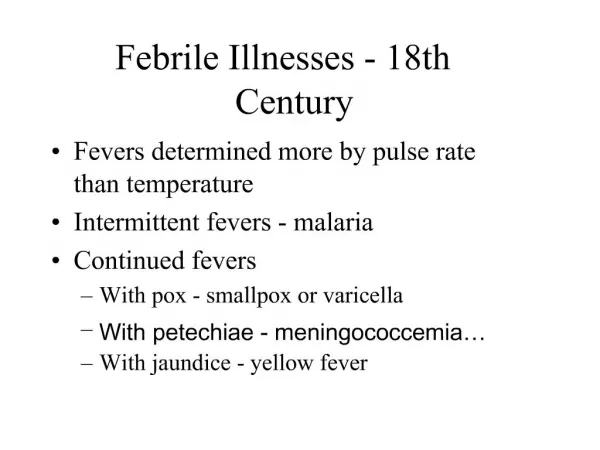
1. Febrile Illnesses - 18th Century Fevers determined more by pulse rate than temperature
Intermittent fevers - malaria
Continued fevers
With pox - smallpox or varicella
With petechiae - meningococcemia…
With jaundice - yellow fever
2. Philadelphia - 1793
3. Philadelphia Death Rates: 1690-1990