Hot Deserts
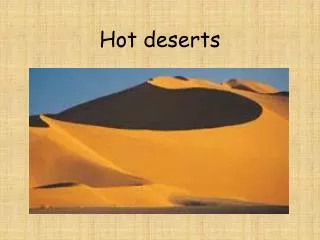
Discover the fascinating world of hot deserts, characterized by their dry climate, minimal precipitation of ten inches or less, and average temperatures between 20-40˚C. These arid regions, often found near plains, host unique ecosystems. Plant species like cacti and aloe are adapted to conserve water, while animals such as dingoes and sand foxes showcase remarkable adaptations like nocturnal behavior and water storage. Explore the intricate relationships between desert flora and fauna, and learn how they survive in harsh environments.


Hot Deserts
E N D
Presentation Transcript
Hot Deserts By: Connor Chandler & Gracson Byrd
Geography and Climate Location-Different locations around the world; mainly near plains Description- Hot and dry with very little water Soil type- Fine, grainy sand Precipitation- Ten inches or less of rain Temperature range- 20-40˚C Climate- Hot and dry
Biodiversity Plants- Cacti, Dragon Tree, Desert Spoon, Aloe, Yucca, etc… Animals-Dingo, Sand Fox, Lizards, Rats, Owls, Snake, Deer, Rabbits, Gila Monsters, Camels
Adaptations Plants-Spikes, Shallow Roots, Water Storage Animals- Nocturnal, Size (Mostly small), Water Storage, Spikes, Speed
Interaction Biotic-The animals strongly rely on the plants for water and sometimes shade Abiotic- Animals burrow in the sand and hide under the pocks for protection from the shade; Plants require the sand for soil