THE GORILLA
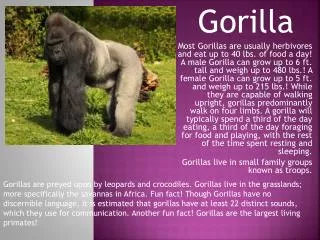
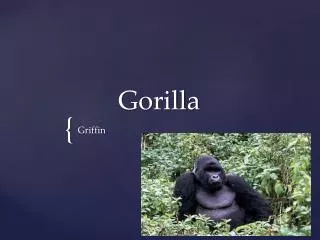
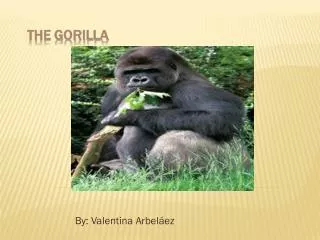
Gorillas, the largest of living primates, inhabit Central America's forests and face severe threats. Divided into two species, these majestic creatures are endangered due to intense poaching and habitat destruction. Adult males weigh up to 200 kg, while females are typically half that size. They are herbivores that primarily consume fruits, leaves, and shoots. Their close genetic ties to humans highlight their intelligence and gentle nature. To ensure their survival, we must engage in conservation efforts, raise awareness, and support initiatives that protect these magnificent animals.

THE GORILLA
E N D
Presentation Transcript
By: Valentina Arbeláez THE GORILLA
Habitat The gorillas are the largest of the living primates. They inhabit the forests of Central America. They are divided into two species, even in four or five sub-species. Adult males range in height 1.65 to 1.75, and weight 140 to 200 kg. Adult females are often half size of a silver back.
Why are they endangered? Both species of gorilla are endangered and have been subject to intense poaching for a long time. Treats to gorilla survival includes habitat destruction and the bushmen trade. Gorillas are one of the most endangered species in the world today. Human actions have placed the largest of the apes in danger of extinction. With no natural predators, it's up to humans to take the initiative and work to save endangered gorillas in the wild.
The gorillas are herbivore, they eat only plants. The most important food for them are fruits, leaves, and shoots. They do not eat meat. What do they eat?
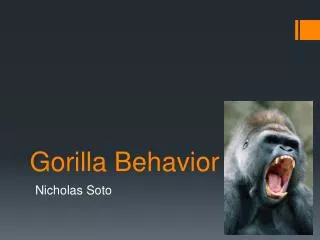
They are three to four years between births. Gorillas are closely related to humans, and are considered highly intelligent. They are inoffensive. How is their behavior?
Donate money to conservation efforts. Adopt a wild gorilla Steer clear of purchasing any product or food which has been made from a gorilla. Work or volunteer in gorilla conservation organizations. Participate in research studies. Monitor gorilla populations and promote public awareness. What we can do to help them: