Advancements in Grid Components for Data Analysis and Production at Lawrence Berkeley National Laboratory
70 likes | 181 Vues
The STAR experiment at Lawrence Berkeley National Laboratory presents innovative approaches to data handling in high-energy physics. This workshop, held on July 14, 2000, discusses key developments in grid-based analysis and production mechanisms. Notable topics include event component splitting, ROOT-based architecture, and efficient data storage in ROOT TTree files. Plans for improved user response time and file transfer methods highlight the focus on enhancing data access and management. The emphasis on component-based architectures and adaptable design caters to evolving experimental needs.


Advancements in Grid Components for Data Analysis and Production at Lawrence Berkeley National Laboratory
E N D
Presentation Transcript
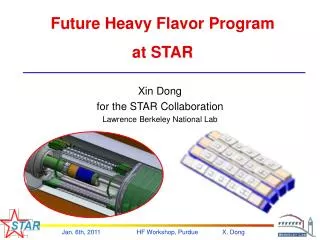
Grid Components in STAR: Experience, Needs and Plans A. Vaniachine Lawrence Berkeley National Laboratory July 14, 2000 PPDG Workshop, Argonne
Outline • STAR is taking data: • Grid in analysis • Grid for production? • Plans
Decisions Taken • Event split into components: • daq (raw data) or fzd (Geant3) • dst: legacy C-structures • event: same info in OO • tags: like an n-tuple • hist: for QA • ... • ROOT-based Architecture • Persistency: • STL containers - structural and reference • schema evolution • Analysis: “good-bye” PAW
Grid Components Deployed for Analysis • tag database: to speed up user response • data in ROOT TTree files (n-tuple): • data description stored together with the data (solves the schema evolution problem) • comments preserved • 2-level hierarchy: 500 tags are in seven groups • split mode for structures (not objects: no need to load classes to analyze tags) • indexed tags (Grand Challenge deployed) • efficient cache management • transparent user access to HPSS in principle, to the raw data as well: “the Dream” is coming true
Component-based Architectures • Grand Challenge: • large size components one component per developer • NOVA: • smaller-size components one components per task Needed: small components, easily adaptable to experiments e.g., “ls” for the HPSS
Grid Components for Production? have to use HPPS data storage: • efficient cache management • transparent user access have to load all distributed nodes: • sustained data transfer methods have to use low-cost commodity components: • latency tolerant algorithms $$$ constraints
Plans for PPDG • Deploy file transfer methods for the BNL-LBNL link current rate: rcf pdsf = 100 GB/day • Managed file caching for high-throughput computing • pdsf as a development test-bed • rcf as a target for deployment