Understanding Food Plants: Seeds, Fruits, and Their Role in Nutrition
110 likes | 230 Vues
Although there are over 300,000 plant species, only a few provide our food. These mainly belong to the angiosperms group, consisting of seeds and fruits like wheat, rice, corn, and bananas. Seeds are nutritious sources of protein, carbohydrates, and fat, while fruits, despite being harder to store, also offer nutrition. A key distinction is that fruits develop from flowers and contain seeds, whereas vegetables are non-reproductive plant parts. Proper pollination in flowers is essential for fruit production and seed dispersal, vital for plant survival and spreading.


Understanding Food Plants: Seeds, Fruits, and Their Role in Nutrition
E N D
Presentation Transcript
SBI 3C 4.12 Seeds and Fruit
Which plants supply us with food? • Even though there are over 300,000 species of plants, only a small number of species actually supply us with food • These species belong to the group angiosperms, which are flowering plants • The most commonly consumed structures are the seed or fruit of the plant
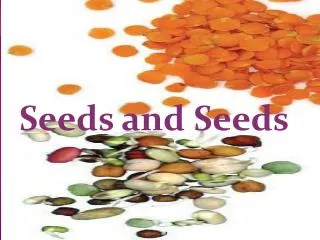
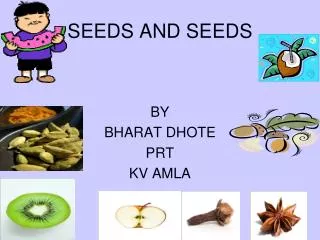
Examples of food plants • Some important food plants are wheat, rice, corn, soybeans, kidney beans, peas, bananas, mangoes, cucumbers and peppers • Seeds contain high amount of protein, carbohydrates or fat which makes them an excellent source of nutrition • Fruits are also nutritious but are harder to store for long periods of time
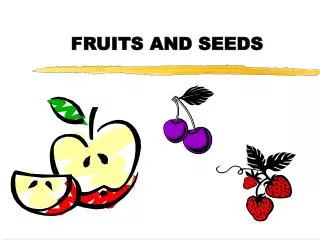
What is the difference between a fruit and a vegetable? • All fruits develop within a flower and therefore, usually contain seeds • A vegetable is any nonreproductive structure of a plant, such as roots, stems or leaves • Commonly misclassified vegetables are tomatos, zucchinis and squash which are actually fruits
How do fruits benefit a plant? • Fruit helps plant to spread its seeds • Why is this important to a plant? • So that they can move away from parent plant, and not directly compete with it for things such as light, water and minerals • It also allows the plant to spread into new environments • Colourful fruits attract animals to fruit which can then also aid in dispersal of seeds
Pollination and Fruit Production • Pollination is the transfer of pollen grains to the stigma of a flower • Most angiosperms do not produce fruit until their flowers have been pollinated • Pollination can occur by wind, insects, birds and other animals • In Ontario, the most important pollinator of our food crops is the honeybee.
Greenhouses • Greenhouses are used in Canada to allow for year-round production of fruits • To allow for successful pollination, pollen transfer can be accomplished by using a fan, by hand, or by bumblebees.
Private life of plants: Travelling • http://www.youtube.com/watch?v=g8W8uiOEhuQ • Answer questions on sheet as we watch.