Understanding Cold and Hot Sensors in Contamination Detection and Evacuation Planning
60 likes | 188 Vues
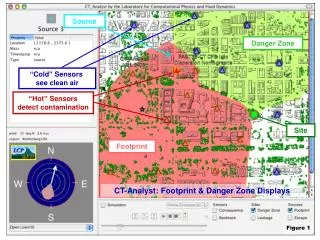
This document explores the functionalities of "cold" sensors that monitor clean air and "hot" sensors that detect contamination. Using the CT-Analyst, we analyze the site footprint and danger zones in relation to unknown sources of contamination. It includes backtracking capabilities and time-dependent plume envelopes to determine safe evacuation routes. Figures illustrate the interaction between sensors, contamination footprints, and recommended escape pathways, enhancing both monitoring and response strategies in hazardous scenarios.


Understanding Cold and Hot Sensors in Contamination Detection and Evacuation Planning
E N D
Presentation Transcript
Source Danger Zone “Cold” Sensors see clean air “Hot” Sensors detect contamination Site Footprint CT-Analyst: Footprint & Danger Zone Displays Figure 1
Unknown Source Backtrack Sensor Downwind Consequence Region CT-Analyst: Backtrack & Consequence Displays Figure 2
Time Dependent Plume Envelope No Man’s Land Evacuation Routes Late Time Contamination Footprint Plume Envelope/Footprint & Escape Route Displays Figure 3
Demonstration of CT-Analyst Sensor Fusion CT-Analyst Will Backtrack to Two (or More) Sources Figure 5