Understanding Geothermal Power: Harnessing Earth's Heat for Sustainable Energy
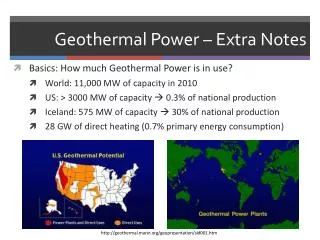
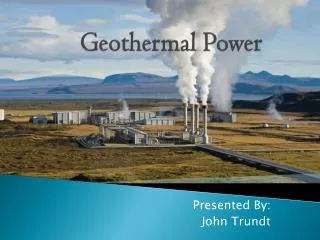
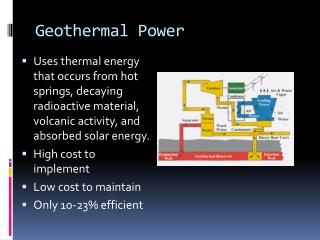
Geothermal power utilizes Earth's thermal energy from tectonic faults and magma pockets, serving as an efficient energy source. It constitutes less than 1% of global energy production, yet offers a footprint 25% smaller than coal plants and eliminates fuel imports. Key components include production and injection wells ranging from 4,000 to 7,000 feet deep. Systems can be categorized into closed loop (vertical and horizontal) and open loop. These systems utilize superheated steam to drive turbines, quietly and efficiently delivering renewable energy while requiring careful management to prevent depletion.

Understanding Geothermal Power: Harnessing Earth's Heat for Sustainable Energy
E N D
Presentation Transcript
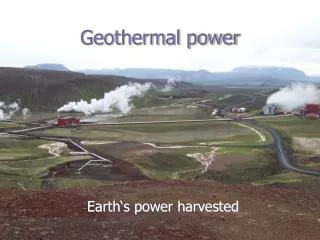
Geothermal power GEO = “EARTH” THERMAL = HEAT
TWO CATAGORIES • GEO-POWER PRODUCTION • Typically must be built on tectonic fault lines • Magma Pockets act as heat source for “boiler” • Accounts for less than 1% of world’s energy • 25% the footprint of coal fired plants • No fuel imports • No rail lines • “Production Wells” vs “Injection Wells” • 4000 – 7000 ft. deep • Super heat fluid flashes to superheated steam • High pressure steam • Low pressure steam • Both drive the turbine • Can be exhausted if mismanaged • Power Plants in the US • Faulkner
Two Categories Con’t • HVAC • Closed Looped Systems • Vertical Loop System • 150 -250 feet deep well with 5 – 6 inch core • Each well has two tubes = doubles surface area • Must grout the hole • $1850/well – depends on area • “Danglers” – air pockets with no contact • Horizontal Loop System • 6 – 14 ft deep depends on area • 100 – 200 ft long • “Slinky” effect with tubing – increases surface area • Manifold controls specific areas • Cheap but need more surface area • Open Loop System