The Turning Point of the Civil War: Gettysburg and Vicksburg
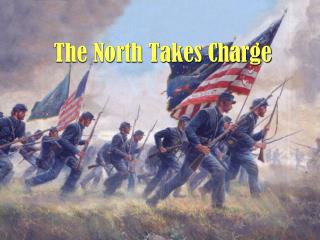
In 1863, the Confederate forces achieved notable victories, including Chancellorsville, where General Stonewall Jackson tragically died from friendly fire. However, this year marked a turning point as General Robert E. Lee's attempt to invade the North culminated in the Battle of Gettysburg. After three days of fierce fighting, the Union army triumphed, inflicting heavy losses. Concurrently, General Grant's capture of Vicksburg granted the Union control over the Mississippi River, effectively splitting the Confederacy. These events signaled a shift in favor of the Union in the ongoing Civil War.

The Turning Point of the Civil War: Gettysburg and Vicksburg
E N D
Presentation Transcript
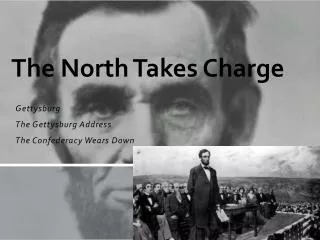
The North Takes Charge Lesson 19: The Civil War part 14
The South, however, won several battles in 1863. Confederate forces defeated the Union army in Chancellorsville, Virginia.
During the battle, the South’s famous general, Stonewall Jackson, died when he was shot accidentally by his own troops.
In 1863 General Robert E. Lee decided again to invade the North. Lee’s forces clashed with the Union army at Gettysburg, Pennsylvania.
The Union army defeated Lee’s troops after three days of fierce fighting. Each side lost more than 50,000 soldiers.
The Battle of Gettysburg was considered a turning point in the war.
Northerners became rejuvenated due to the fact that they had finally broken through and defeated Lee’s army.
Lee would continue to lead his men brilliantly in the next two years of the war. But the Confederacy would never recover from the loss and never again hope to invade the North.
The day after Gettysburg, General Grant captured Vicksburg, Mississippi, for the Union. It was another significant defeat for the Confederacy.
As a result of the battle, the Union controlled the Mississippi River. The Confederacy was split in two.