Ecology Assessment
This analysis explores abiotic and biotic factors influencing an ecosystem's health, focusing on the essential role of water and its impact on populations of organisms like frogs, algae, and trees. Water availability is a crucial limiting factor for frog populations, highlighting their amphibian needs for moisture. This study also examines r-strategists such as mosquitoes and K-strategists like geese, detailing their reproductive strategies. Additionally, the food web and ecological succession within the environment, featuring interactions of various species and the role of decomposers, are discussed.

Ecology Assessment
E N D
Presentation Transcript
Abiotic Factors Amount of Water Oxygen levels in water and air Temperature of water Clouds/weather Amount of shelter
Biotic Factors Population of trees Trees Population of frogs (predator and prey) Population of algae Population of lily pads Population of predator birds
Limiting factors The amount of water is a limiting factor to the frogs that live in the environment because every frog needs a certain amount of water to live. This is because they need to stay moist because they are amphibians. If the amount of water drops the population of frogs will drop too.
R strategist One population if r strategist in this ecosystem are the mosquitoes. R strategists are short living and fast reproducing. They also reproduce a in large quantities
R strategist graph Population Time (years)
K strategists One k strategist population in this ecosystem would be the population of geese. K strategists are long living (compared to most r strategists), reproduce once in a while, and once impregnated take time to birth offspring.
K strategists graph Population Time
Trophic Levels Hawk Hawk There is a larger population of the first trophic level because more organisms depend on them compared to a fourth trophic level Frogs Frogs Frogs Fly Larvae Fly Larvae Fly Larvae Fly Larvae Algae Algae Algae Algae Algae Algae AlgaeAlgae
Food Web Hawks Squirrels Mosquitoes Small Birds Frogs Geese Fly/ Fly Larvae Small fish Oak Trees/Acorns Grass seed Algae
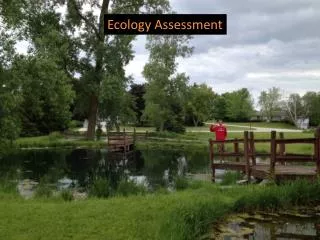
Succession Analysis This ecosystem is experiencing succession because there are plants growing through cement and the docks. There are also plants starting to succeed in the road in the back.
One decomposer in the ecosystem is fly larvae. The eat dead animals. This decomposes them and returns the carbon through their wastes. They also return nitrogen to the soil through the decomposing of organisms.