Understanding Major Senses: Vision, Hearing, Taste, Smell, and Touch
Explore the major sensory systems—vision, hearing, taste, smell, and touch. This chapter delves into how we perceive the world through light wavelengths and the visible spectrum in vision, sound waves and frequency in hearing, and the intricate functions of taste and smell with flavor and olfaction. We’ll also examine the process of sensation, transduction, and adaptation, as well as the distinctions between sensation and perception. Additionally, we discuss applications like artificial senses, pain control, and the placebo effect, highlighting the complexities of our sensory experiences.


Understanding Major Senses: Vision, Hearing, Taste, Smell, and Touch
E N D
Presentation Transcript
Sensation Chapter 5
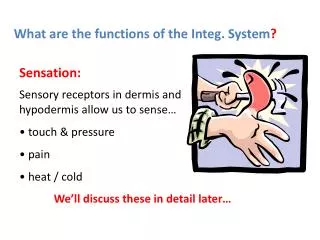
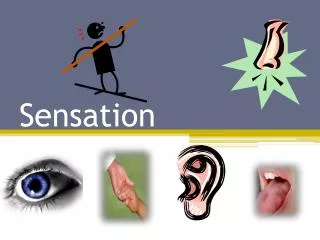
6 major senses Vision = wavelengths, visible spectrum, focus, dimensions, color Hearing = sound waves, amplitude, loudness, pitch, frequency, audition Balance = cochlea, fluid and hairs, sicknesses Taste = buds (sweet, salty, sour, bitter) and flavor Smell = cells, olfaction, dissolve mucus Touch = pressure, temperature, pain
3 characteristics Transduction = organ changes physical energy into physical signals Adaptation = decreasing response over exposure Sensation vs. Perception = combining meaningless bits of information into experience
4 applications Artificial Senses Pain Control Placebo Effect Disgust vs. Delight