Effective Problem-Solving: Understanding Challenges and Strategies for Success
This comprehensive guide explores the definition of problems, their historical context, and assessment categories. It covers various types of issues individuals face, along with key components of problem behavior such as mood, cognition, and context. Additionally, it addresses client resources, perceptions, and common characteristics of maladaptive problem solvers. Lastly, it provides six productive perspectives on viewing problems as opportunities for growth and discusses the challenges inherent in problem-solving, emphasizing the importance of both reasoning and emotional regulation.

Effective Problem-Solving: Understanding Challenges and Strategies for Success
E N D
Presentation Transcript
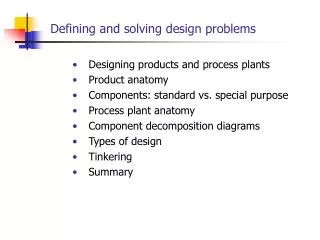
Defining Problems • History • Assessment Categories • Range of Problems • Selecting Problems http://www.picsearch.com/info.cgi?q=problem&cid=820468460351&start=33
Components of Problem Behaviors • Mood • Somatic • Overt Behavior • Cognition • Context • Relationships • Antecedents • Consequences • Secondary Gain • Prior Solutions http://www.picsearch.com/info.cgi?q=problem&cid=441266193685&start=113
Client Resources • Family • Skills • Church • Prior experience http://www.picsearch.com/info.cgi?q=family&cid=691286815298
Client Perceptions • Thoughts • Feelings • Actions http://www.monitor.net/monitor/0011a/perception.gif
4 Characteristics of Maladaptive Problem Solvers • Blame self • Minimize benefits maximized looses (discounting) • Believe problems insolvable • Feel inadequate or incompetent
State the 6 productive ways to look at problems • part of life • opportunity for personal growth, self-control, and self-improvement. • things get worse if not solved • solutions exist • they have the ability • takes time and energy
Describe the 4 problems that people face in solving problems. • Problem solving takes time and energy. • It is easier to avoid solving problems when you are influenced more by your feeling than by reason. • People often respond impulsively and do not take the time to think up a solution. • Problem solving requires a delay in gratification
Discriminate between • Changeable vs. Unchangeable • Problem focused vs. emotion-focused