Understanding LASER Technology: Mechanism, Types, and Applications in Spectroscopy
LASERs, or Light Amplification by Stimulated Emission of Radiation, produce intense, coherent light beams at very narrow bandwidths (0.01 nm), making them invaluable in spectroscopy. These devices require specific components, including a power supply, pumping source, laser media, and mirrors to function effectively. The mechanism involves population inversion and stimulated emission, amplifying coherent photons. Common types of lasers include Solid State (Nd:YAG), Gas (He/Ne, CO2), Dye lasers, and Semiconductor Diode lasers. Each type plays a distinct role in various applications due to their unique properties.

Understanding LASER Technology: Mechanism, Types, and Applications in Spectroscopy
E N D
Presentation Transcript
LASERs Light Amplification by Stimulated Emission of Radiation
Function • Produce an intense beam of light at a very narrow bandwidth (0.01 nm) that is highly coherent • Useful in spectroscopy • Specificity • High sensitivity • Small detection window
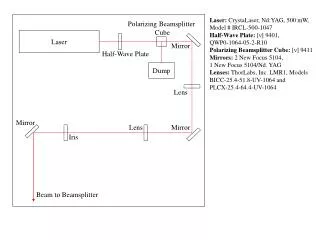
Components • Power Supply • Pumping Source • Laser media • Mirrors
Mechanism of Action • Power Supply turns on the pumping source • Pumping Source emits radiation that is absorbed by laser media • Intensity of pumping source produces a population inversion • Stimulated emission becomes the dominant process
continued • Stimulated emission – one photon is “absorbed” by excited electron and two coherent photons are emitted. • Coherent photons that happen to travel along the horizontal path between the two mirrors are selectively amplified (photon traveling at different angles deviate from the path between the two mirrors and are lost
3 and 4 level systems are most common because it is easier to reach a population inversion En NR (fast) En Non-radiative NR (fast) Ey Ey Ex NR (fast) E0 E0
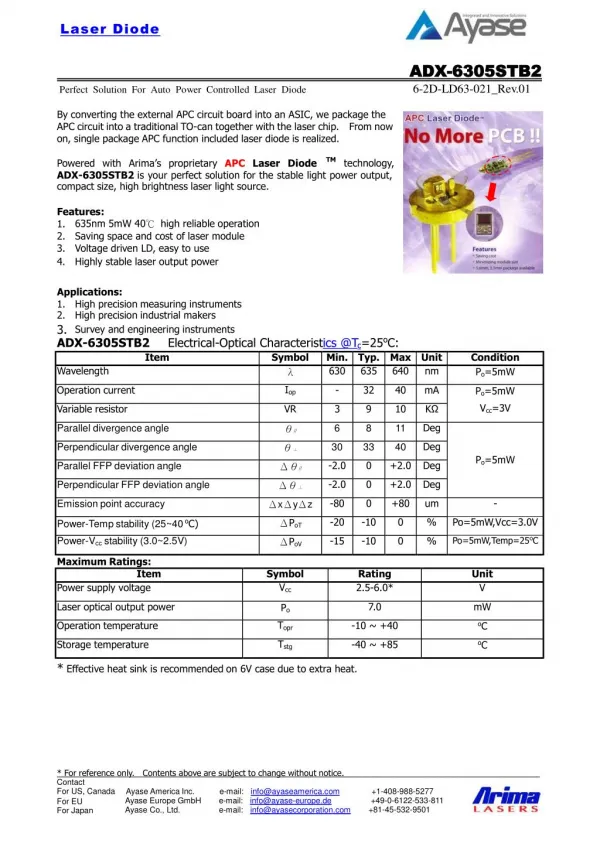
Types • Solid State • Nd:YAG laser; 1064 nm (freq doubled) • Gas lasers • He/Ne, CO2, N2, eximer (ArF+) • Dye Laser • Fluorescent dye solutions, tunable (20-50 nm) • Organic compounds capable of fluorescing in the UV, visible, and IR regions • Semiconductor Diode Lasers • LEDs; Not used much in spectroscopy, as of yet.