Understanding Weather and Climate: Key Components and Impacts on Our Planet
This guide explores the differences between weather and climate, focusing on the duration of events and their records. It delves into the mechanisms of heat transfer—conduction, convection, and radiation—and outlines the annual energy flow and variations in air pressure with altitude. The text highlights greenhouse gases' roles in global warming, such as carbon dioxide and methane, and discusses their natural and anthropogenic sources. Additionally, it covers thunderstorm phenomena, including frequency, lightning, and hail production, offering insights into tornado formation and historical data.

Understanding Weather and Climate: Key Components and Impacts on Our Planet
E N D
Presentation Transcript
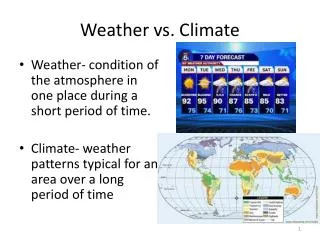
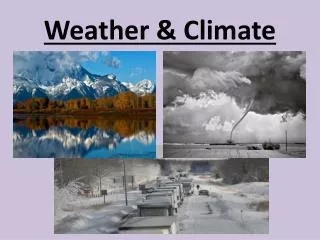
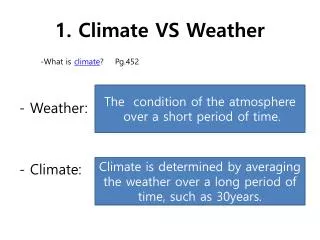
Weather vs Climate Duration of events is key Which leaves a record?
Heat transfer occurs by: • Conduction – atomic or molecular transfer • Convection – mass movement • Radiation – wave-like energy emitted
Variations in air pressure With increased altitude
Role of variable gases and how they change • Carbon dioxide • Anthropogenic sources • Natural sources • Water vapor • Air temp controls amounts in atmosphere • Ozone • Shield to UV rays • Attacked by CFCs and freon • Methane • Decay of organic material; coal mines; animals • Halocarbons • Cl, F and Br compounds; anthropogenic • Aerosols [microscopic liquids and solids] • Desert dust, wildfires, volcanic gases
Polar jet Concave north Concave south
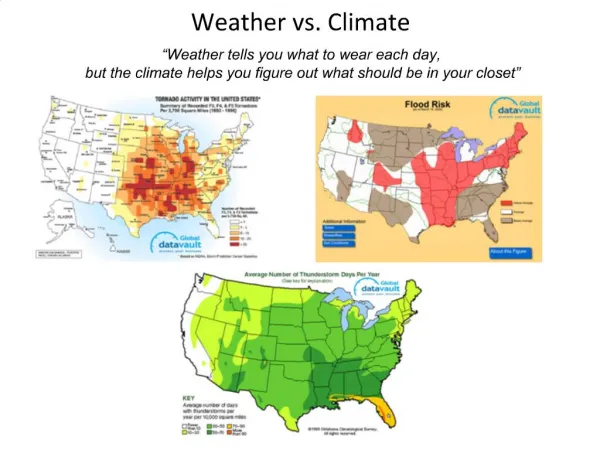
Thunderstorm facts • About 16 million occur worldwide each year • Florida has about 100 thunderstorm days per year; Uganda has about 240 • 1,800 occur at any given moment • All produce lightning; severe storms produce hail which can travel up to 100 mph
<20% of supercells generate tornadoes Organizational stage
Mature stage, up to 1 mile wide at base; form on trailing edge of supercell