Download

1 / 14
140 likes | 263 Vues
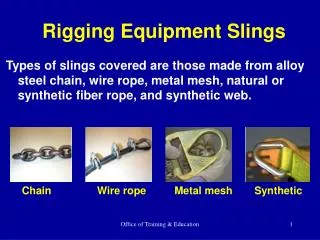
This resource provides essential knowledge on wire and fiber rope slings in industrial rigging. It covers key differences between wire and rope slings, definitions of rigging principles, and classified strength ratings (IPS, EIP, EEIP). The guide also addresses factors affecting wire-rope performance, including bending, temperature, and corrosion. Additionally, it discusses sling components, inspecting ropes, and safe practices when operating and maneuvering loads. Proper understanding of these elements is vital to ensure safe and efficient rigging operations.

E N D
MAIN 220 Industrial Rigging Chris Miller
Wire Rope / Slings • Objectives • Know difference between Wire and Rope Slings • Know definitions of rigging principals
Wire Rope • Classification • # strands • # of wires per strand • Wire Strength • IPS • EIP • EEIP FOR MORE INFO... TCP TRAINING Preparing The Site (319)
Factors Affecting Wire-rope • Bending • Sharp Corners • Angles of Force • Temperature • Heating • Corrosion and environment
Sling Components • P. 36 p. 37 and p. 41 • Sling attachments • Where Used • Wear • Performance Issues FOR MORE INFO... TCP Equipment Installation Lesson 2,3,4 (318)
Fiber Rope and Webbing Slings • Fiber Natural • Manila, boat rope • Grades 1-3 • P.51 • Synthetic • Nylon • Polyester • Polypropylene • Benefits • Length of fiber
Factors Affecting Fiber-Ropes • Sharp Bends • Temperature • Moisture • Chemical Active Environments • Fittings and Splices
Fiber Rope and Webbing Slings • Load Capacity for fibers • P. 57 color codes • Inspecting ropes • Heat damage • Apparent decomposing • Excessive wear • Worn Stitching • Cuts Tears Punctures • Distortion
Industrial Hoists and Cranes • Lesson 5 Chain Hoist • P. 67 picture • Hook-Suspended • Trolley-Suspended • Overhead powered • Single reeving • Double reeving Safety overloading Limit Switches
Principles and Practices • General Practices • Properly Trained • Rigger familiar with equipment • Rigger makes final say on safety • If signaling requires only 1 person in charge • Everyone as say to stop • Before moving determine where it is going • Load is free to move, not fastened to ground • Be sure everyone is clear of area • No shock loading • No riding • Do not move over where people are working • Never Leave suspended • Never work under load unless provisions to support are in place • Keep hands fingers out of the way
Principles and Practices • Sling Operating Practices • Avoid sharp sling angles • Do not pull sling from under a load when load is resting on sling • Do not leave slings on the ground • Slings should be stored properly • Repair or remove damaged slings • Do not hammer metal mesh slings
Principles and Practices • Turning a Load • Most difficult maneuver • Consider all options before moving • Determine center of gravity • Will blocks be required to support load • Can use • One-hook turn • Single-Sling Turn • Two-Hook turn • P.89
Principles and Practices • Eye Bolts • Have pull ratings and must be remembered p.92 • Rigging thought Process • What is done with load • What tools are needed • Is capacity enough and adequate • How can the hook up be • What will happen with path of travel • What will happen once load is lifted • How will load be stored
Scaffolds and Ladders • Eyebolts and Ratings • P. 92 picture • Lean against the wall