Understanding Depression in Norway: Prevalence, Causes, and Treatments
100 likes | 227 Vues
Depression is one of the most common mood disorders affecting people in Norway, where up to 50% of the population may experience it at some point in their lives. This mental health issue often arises from various life events and factors such as low levels of sunlight, stress, and genetic predisposition. With an annual cost of NOK 70 billion and approximately 500 suicides each year, understanding its symptoms—ranging from anxiety to fatigue—and treatment options is crucial. This overview outlines classifications, causes, symptoms, pathophysiology, and treatment methods for depression in Norway.


Understanding Depression in Norway: Prevalence, Causes, and Treatments
E N D
Presentation Transcript
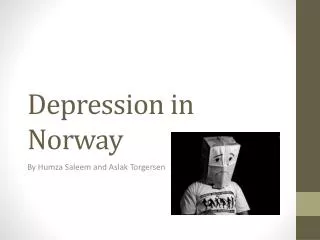
Depression in Norway By HumzaSaleem and Aslak Torgersen
Depression • Mood Disorder • Not necessarily a pshyciatric disorder – a resultofcertainlife events • Negative perspectivetolife • Most common mental disorder
Statistics • Upto 50% of population depressed at onepoint • Cost NOK 70billion (everyyear) • Approx. 500 suicides a year in Norway.
Classificationof depression • Endogenousdepression • No discernible cause • GeneticFactors • Reactivedepression • Physicalscausessuch as stress, drugsor medicaltreatments.
Causes • Lowlevelofsunlight • Smoking • Thyroiddisease • Unstablecircadian rhythm • Diet • Birthcontrol pill • Medications • Stressfull health • Genetic • Alcohol and drugs • Toomanychoises • Nothingtostrive for • Excessivework
Symptoms • Feeling empty, sad, anxious and hopeless • Insomnia • Excessivesleeping • Fatigue • Loss ofenergy • Loss ofappetite • Overeating • Troubleconcentrating, remberdetails. • Makingdecisions • Aches, pains or digestive problem • Loss ofinterest in funactivities • Lack of libido
Pathophysiology • Neurotransmitters: • Serotonin • Noradrenaline • Lowlevels • Not fullyunderstood
Treatment • Mild: • Wait and see / get over it • Excercise • Self helpgroups • UV lamp (lack ofsunlight) • Moderate • Cognitivetherapy • Severe • Antidepressants • Combination therapy • Mental health teams
Sources • http://en.wikipedia.org/wiki/Depression_(mood)#Depression_in_young_adults • http://www.ncbi.nlm.nih.gov/pmc/articles/PMC2950973/ • http://en.wikipedia.org/wiki/List_of_countries_by_suicide_rate • http://www.netdoctor.co.uk/diseases/depression/classification_000001.htm • http://en.wikipedia.org/wiki/Suicide • http://www.newsinenglish.no/2009/10/06/depression-hits-half-the-population/ • http://www.nhs.uk/Conditions/Depression/Pages/Causes.aspx • http://www.nhs.uk/Conditions/Depression/Pages/Treatment.aspx