The Water Cycle: Understanding Processes of Evaporation, Condensation, and More
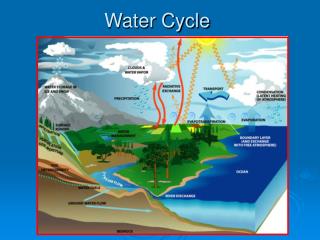
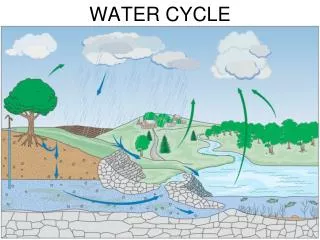
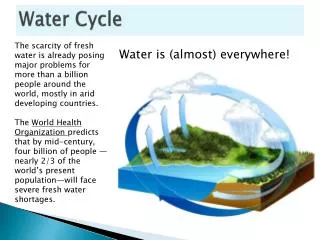
The water cycle is a continuous process of recycling water, encompassing several key processes. Evaporation transforms liquid water into vapor, while condensation converts gas back into liquid, primarily in the clouds. Precipitation occurs when water falls as rain, snow, sleet, or hail. Additionally, waves indicate the movement of water particles, and storm surges are large waves generated by storms. Surface currents are created by steady winds, and tides represent the daily changes in ocean water levels. Deep ocean currents arise from density differences in water.

The Water Cycle: Understanding Processes of Evaporation, Condensation, and More
E N D
Presentation Transcript
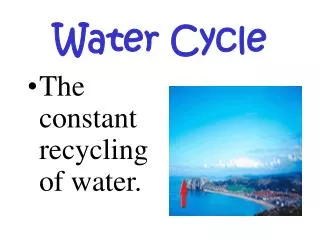
Water Cycle • The constant recycling of water.
Evaporation • The process of changing a liquid into a gas.
Condensation • The process of changing a gas into a liquid. • This process takes place in the clouds.
Precipitation • Rain, snow, sleet, or hail that falls from the clouds.
Waves • The up and down movement of water particles.
Storm Surge • A very large wave.
Surface Currents • Forms when steady winds blow blow over the surface of the ocean.
Tides • The daily change in the local water levels of the ocean. Low Tide High Tide
Deep Ocean Currents • Form because of density differences in ocean water.