Daily Routines and Frequency in English
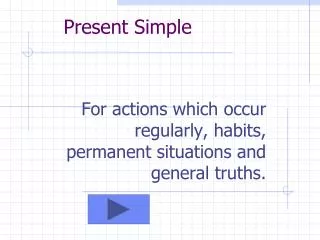
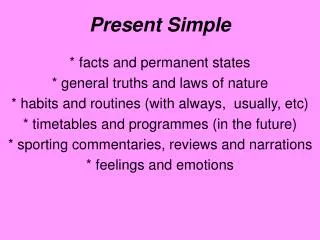
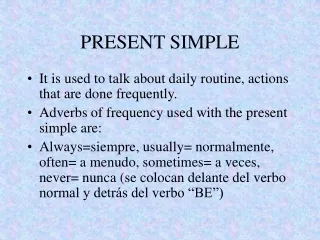
This content explores the use of simple present tense to describe daily routines and frequency in English. It provides examples of common activities, such as showering, getting dressed, and brushing teeth, as well as how to form questions and negative statements. Key expressions about frequency—like "always," "usually," "sometimes," "rarely," and "never"—are highlighted, along with sample sentences and questions. This comprehensive guide is a useful resource for learners looking to enhance their conversational skills in English.

Daily Routines and Frequency in English
E N D
Presentation Transcript
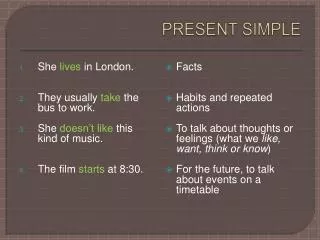
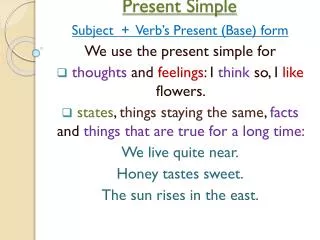
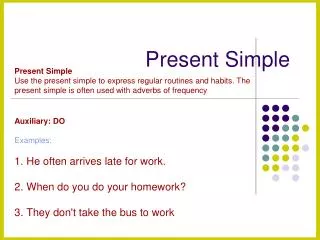
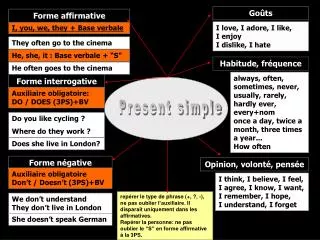
Talking about routine • My brother takes a shower every morning. • John always puts on his clothes before having breakfast. • I usually get up late on Fridays. • My sister and I share the same bedroom. • Ahmed brushes his teeth after every meal.
play get up work go miss brush watch • I • You • We • They +
plays gets up works studies goes misses brushes watches • She • He • It +
Talking about frequency • always • usually • often • sometimes • occasionally • rarely / hardly ever • never
one week once a week one week twice a week one month three times a month
Examples of sentences • My mother usually makes breakfast in the morning. • I sometimes go to Dubai at the weekend. • My sister and I play tennis twice a week. • We hardly ever visit my father’s cousins.
Asking questions play get up work go miss brush watch + + Do ? I you we they
Asking questions play get up work go miss brush watch + + Does ? he she it
Examples of questions • Do you always do your homework? • How often do they come round to your house? • Does your friend like taking pictures? • Where does your uncle live?
Negative form play get up work go miss brush watch I You We They + + don’t
Negative form play get up work go miss brush watch He She It + + doesn’t
Examples of sentences in the negative form • I don’t play tennis. • My parents don’t use credit cards. • My uncle doesn’t work anymore. • Amnahdoesn’t like playing computer games.