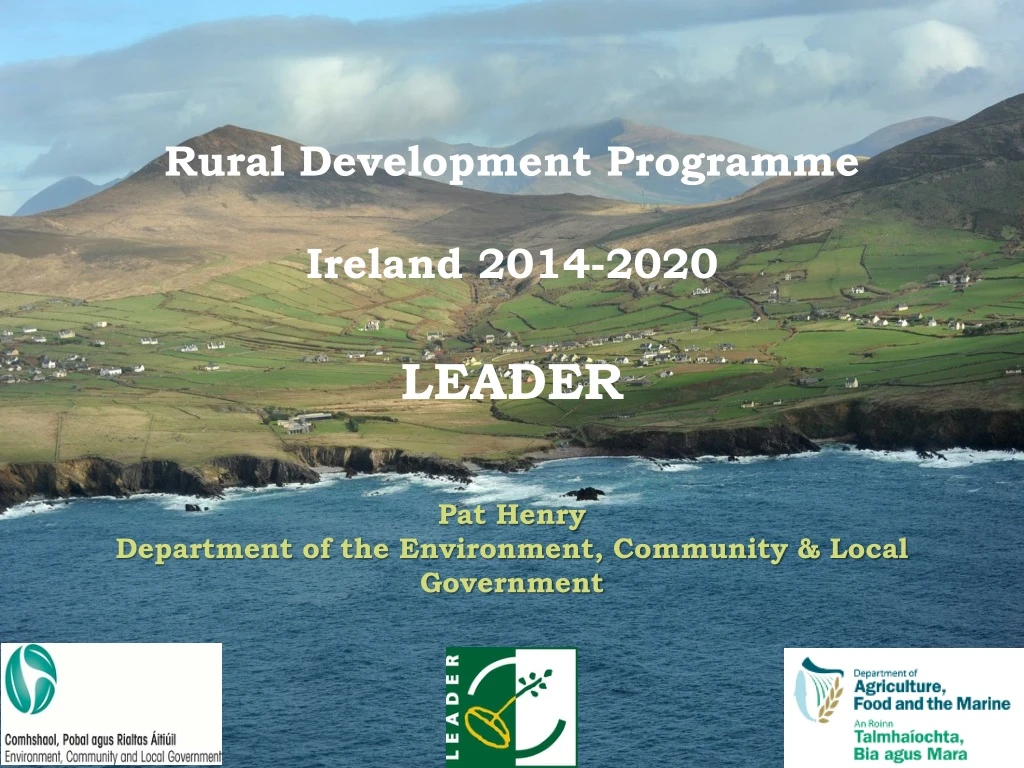

Rural Development Programme Ireland 2014-2020 - LEADER
E N D
Presentation Transcript
3 Rural Development ProgrammeIreland 2014-2020LEADERPat HenryDepartment of the Environment, Community & Local Government
Policy Context • EAFRD – Rural Development Programme 2014-2020 • One of EU Funds in Partnership Agreement • Total Allocation of €4 billion (€2.19 billion from EU) • 7% allocated to LEADER (Minimum 5%) • €250 million for LEADER over 7 years • Co-Funded by the Exchequer at 63%/37%
Policy Context • Priority 6: Promoting social inclusion, poverty reduction and economic development in rural areas. • Facilitating diversification, creation of new small enterprises and job creation; • Promoting local development in rural areas; • Enhancing access to, use and quality of ICT in rural areas • Total LEADER value €250 million • €220 million for Regional Areas – divided based on • €10 million for co-operation projects • €15 million for agri-food schemes • €5 million for REDZ
Community Led Local Development (CLLD): Involving citizens at local level
Sub-regional Area Allocation • €220 million allocation • 28 sub-regional areas • Minimum allocation of €3 million • Remainder on basis of: • Population density • Level of deprivation – Resource Allocation Model
LCDC as the LAG • LCDC is one type of LAG • Complies with LAG requirements • Possible additional membership • Equal decision making power • Joined up, holistic role for LCDC members – ensure proper targeting of supports • Role of Implementing Partner (local development company) and Financial Partner (local authority)
Local Development Strategy • LAG governance and procedures • Area profile & Needs analysis (link with LECP) • SWOT and Public Consultation • Action Plan – • Cornerstone of funding for 2014-2020 • Linking LEADER themes with Local objectives • Financial Plan
How does it work? • Targeted and rolling calls for proposals: Identify priorities • Expression of Interest stage followed by Full Application • Animation, including capacity building for potential applicants: Ensure inclusivity • Administrative checks of applications • Evaluation Committee – Scoring and Recommendations • LAG = Decision makers • Project roll-out
Decision Making • Important that the ethos of the LEADER approach is reflected in the decision making processes • 49% public and 51% private representation on the LAG • At least 50% of the votes in LEADER decisions are cast by partners who are not representing public authorities • Conflict of interest must be dealt with • 60% of the LAG membership must vote in order for project decision to be valid
Towards Implementation – next steps • Draft strategies have been received from all 28 regions • 17 selected (some subject to provision of additional information) • Operational in coming weeks • On-going training and capacity building – particularly for Implementing & Financial Partners • National Rural Network: • Identifying and addressing capacity needs of LAGs • Sharing best practice • Building co-operation
Any Questions? Thank You.