Transforming Education in Wilder Elementary: A Journey Towards Sustainable Change
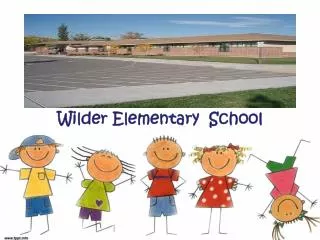
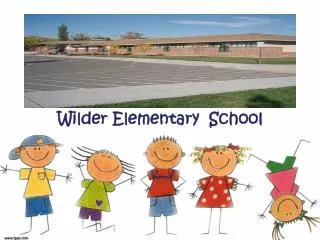
Wilder Elementary School, located in a rural farming community in Idaho, faces several educational challenges, including high poverty and a lack of shared vision among staff. With 79% of students identified as Hispanic and significant data indicating below-basic performance on assessments, the school embarked on a professional development overhaul. This initiative focuses on creating engaging instruction, fostering trust among educators, and implementing data-driven strategies. Collaborations with Boise State University aim to empower teachers, ensuring all students receive quality education tailored to their needs.

Transforming Education in Wilder Elementary: A Journey Towards Sustainable Change
E N D
Presentation Transcript
Community • Rural farming community 40 miles west of Boise • Agricultural: potatoes, dairy, onions, hops, seed corn • Population: 1500 • Hispanic: 79% (mainly ELL) • 100% FRL • 7 principals in 13 years • Most Caucasian farmers sent children to schools in outlying communities
THEN • Teaching in Isolation • Lack of Shared Vision • Lack of Trust • Instructional Minutes Lost • Constant Interruptions • Falsification of Data
Curriculum • “How do you expect me to teach without a book?” 5th grade teacher • Basal reading material removed • District crafted curriculum • 3 pages per grade level
Instruction • Non-engaging instruction - resulted in minimal learning. • Classroom management was out of control • Baby sitting videos on a daily basis • 1 hour of total recess time a day. • Etc…
Assessment • Student passing all district assessment s – Below Basic on the ISAT • If students are “passing” the assessments there was no need to change instruction • Data could not be used to drive instruction
Professional Development • Typical PD – A few days a year. • Empower your staff through high quality PD by building their capacity to be great instructors! • Create a Professional Development Environment • Non-negotiables • What all teachers do for all the students all the time.
Professional Development • Developed a school wide plan for systemic and sustainable change • Partnerships • Boise State University Literacy Professors. • Weekly PD (2 hours) • Inspect what you expect
Priority 1 – Instruction • The will to teach well is not as important as the will to prepare to teach well. • Differentiated Instruction • Modeled Instructional expectation • Weekly observations • Immediate Feedback
Priority 2 – Curriculum • Unit Driven Instructional Episodes • Sheltered Instruction Observation Protocol • Integrated Literacy Techniques • Here is what it looks like • Here is how you improve it • 4th Grade • Idaho History Unit • Unpacking the ICS
Priority 3 – Assessment • Once we fixed the Instruction/Curriculum • PD on authentic assessments • Formative/Summative • THEN – Data Driven Weekly Professional Development Meetings
Thoughts… • Rigor, Relevance, And Relationships • Teachers teach kids, programs don’t • Build Capacity in Teachers not the Idaho Core Standards • Our teachers don’t turn the pages in a textbook to teach, they turn the pages in the minds of their students as they teach.
Year Two Year Two
Year Three Year Three
References • Bear, D. R., Invernizzi, M., Templeton, S., & Johnston, F. (2008). Words Their Way (4 ed.). Upper Saddle River : Pearson Education. • Blankstein, A. M. (2006). Failure Is Not An Option. Corwin. • Blankstein, A. M. (2011). The Answer Is In The Room. Corwin. • Breaux, A., & Whitaker, T. (2006). Seven Simple Secrets, What Teachers Know and Do. Eye on Education • Dahlgren, R. (2001). Time to Teach!. Atlanta: The Center For Teacher Effectiveness. • Foresman, S. (2008). Investigations. Glenview: Pearson Education.
http://readinga-z.com Maxwell, J. (1999). The Power Partnerships in the Church. Countrymen. Maxwell, J. (1999). The 21 dispensable qualities of a leader. Thomas Nelson. Thematic Integrated Literacy Techniques TILT (Dr. Maryanne Cayhill & Dr. Ann Gregory Whitaker, T. (2003). What Great Principals Do Differently. Eye On Education. Willam, G. (1990). The Quality School, Managing Students Without Coercion. Harper Perennial.