Revitalizing Community Forestry in Harrop-Procter: Lessons from a Successful Cooperative Model
160 likes | 277 Vues
Explore the transformative journey of the Harrop-Procter Community Forest, a member-owned cooperative established in 1999 to protect local watersheds and promote ecosystem-based forestry. This initiative emphasizes sustainable practices in the 11,000-ha forest, which boasts 100-year-old mixed forests and sensitive terrain. With a focus on community resilience, the cooperative fosters local employment, innovative forestry practices, and strong partnerships with area mills. Discover key lessons for communities seeking success through grassroots initiatives despite challenges in public land management.


Revitalizing Community Forestry in Harrop-Procter: Lessons from a Successful Cooperative Model
E N D
Presentation Transcript
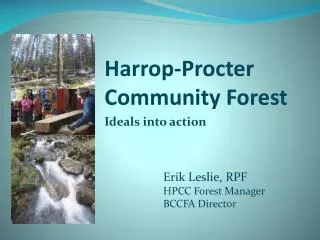
Harrop-ProcterCommunity Forest Ideals into action Erik Leslie, RPF HPCC Forest Manager BCCFA Director
Outline • Landbase, community, history, forestry • HPCC business • Lessons
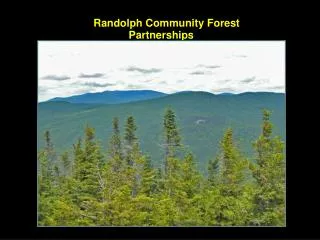
The Harrop-Procter Forest • 11,000 ha • 100 year old mixed forests • Steep, sensitive terrain • Domestic watersheds
The Harrop-Procter Community • Diverse rural community • Mixed economy • Independent, volunteer spirit • Concerns about industrial clearcutting
Harrop-Procter Community Co-op • Offered community forest in 1999 • Member-owned co-operative • Objectives: • Watershed protection • Ecosystem-based forestry • Local employment
Ecosystem-based forestry Comprehensive reserve network Riparian Old growth Rare ecosystems Connectivity Zoning for multiple uses Site-sensitive logging, partial cutting Climate change adaptation
10,000 m3 AAC 100% in-house planning, layout, supervision Strong relationships with area mills 10 – 20% of logs to our mill FSC certification The business—forestry
The business—value-added Higher-value, unique logs 2 bandsaw mills, edger, kiln, moulder Storage sheds, delivery truck Cedar and Douglas-fir lumber; custom timbers Primarily local retail market, some regional/ wholesale
The business—overview $1,000,000 revenue 2011/12 Small profits after start-up losses Job creation Strong community support
Lessons for communities Stay true to your vision Stay focused Don’t take ‘no’ for an answer Grassroots, co-operative approach can work
Lessons for everybody Small community groups can succeed where traditional enterprises fail Community forests can be a solution for contentious public lands A crisis helps to mobilize support The CBFM risks are low, the potential benefits large
Thank you! Erik Leslie, RPF erikl@netidea.com www.hpcommunityforest.org