
SlideServe
Menu
Préférences
© SlideServe · v2026

PROTECTIVE CLOTHING 7.11

danil avatar
25 diapositives · 515 Views · Jun 04, 2012

PROTECTIVE CLOTHING 7.11. DESCRIBE the selection criteria for personal protective clothing and equipment DESCRIBE the cause, effects and prevention of occupational dermatitis. ENABLING OBJECTIVES. REFERENCES : (a) NSTM, CH 074, VOL 3, GAS FREE ENGINEERING
PROTECTIVE CLOTHING 7.11 - slide 1
01 / 25PROTECTIVE CLOTHING 7.11
1 / 17

Télécharger la présentation

PROTECTIVE CLOTHING 7.11
Une image / un lien ci-dessous est fourni (tel quel) pour télécharger la présentation

Politique de téléchargement : le contenu du site vous est fourni TEL QUEL pour votre information et votre usage personnel ; il ne peut être vendu, concédé sous licence ni partagé sur d’autres sites sans l’accord de son auteur.Le contenu vous est fourni TEL QUEL, pour votre information et votre usage personnel uniquement. Téléchargez la présentation en cliquant sur ce lien. Lors du téléchargement, si vous ne parvenez pas à télécharger une présentation, l’éditeur a peut-être supprimé le fichier de son serveur.Pendant le téléchargement, si vous ne parvenez pas à obtenir une présentation, le fichier a peut-être été supprimé par l’éditeur.

F I N

Plus de contenu associé

Transcription de la présentation
  1. PROTECTIVE CLOTHING7.11

  2. DESCRIBE the selection criteria for personal protective clothing and equipment DESCRIBE the cause, effects and prevention of occupational dermatitis. ENABLING OBJECTIVES

  3. REFERENCES: (a) NSTM, CH 074, VOL 3, GAS FREE ENGINEERING (b) NTTP 3-20.31, SURFACE SHIP SURVIVABILITY (c) NSTM, CH 077, PERSONNEL PROTECTION EQUIPMENT (d) OPNAVINST 5100.19 (series), NAVOSH MANUAL (e) 29 CFR 1900 (SERIES)

  4. SELECTING PROTECTIVE CLOTHING/EQUIPMENT • TURN TO APPENDIX H, NSTM 074 VOL. 3

  5. OCCUPATIONAL DERMATITIS • What is it? • Inflammation of the skin • Results from exposure to irritants in the work environment • May be slight reddening of the skin with mild itching • Rash • Small eruptions with intense itching • What causes it?

  6. CAUSES OF SKIN PROBLEMS • CHEMICAL • Most frequent cause of dermatitis • Acts as primary skin irritant • Differs in two respects: • Reaction Time • Mode of Action • Mists, vapors, diluted or full strength • MECHANICAL • Friction • Pressure • Results in abrasions, wounds, bruises • Introduces foreign bodies into skin • Examples: Falling on Non-Skid, Air Nozzle • BIOLOGICAL AGENTS • Bacteria, viruses, fungi, and insects • Complicates dermatitis • Examples: Bee stings, Athlete’s foot • Not all skin reacts in the same way or to the same degree to causes

  7. FACTORS INFLUENCING SKIN REACTION • TYPE OF SKIN • Pigmentation • Dryness • Hairiness • SEX OF THE PERSON • Women have more sensitive, less oily skin than men • AGE • Affects younger personnel more

  8. FACTORS INFLUENCING SKIN REACTION • TEMPERATURE EXTREMES • More prevalent in warm weather • Risk of direct contact is greater due to less clothing worn • Excessive perspiration - skin is more vulnerable • Low winter temps cause dry, chapped skin causing cracks

  9. FACTORS INFLUENCING SKIN REACTION • EXCESSIVE OILINESS/DRYNESS • Naturally oil skins are less likely to incur dermatitis when working with fat solvents • More susceptible to substances that remove oil • Dry skin cracks easily, especially around alkalis and solvents • Cracked skin makes skin subject to infections • LACK OF CLEANLINESS • ALLERGIES

  10. EASIER TO PREVENT THAN TO CURE

  11. PREVENTION • Chain of command support • Hazardous awareness training • Personal cleanliness • Eliminate contact • Identify hazards • Good housekeeping • Instruction • Barrier creams

  12. NSTM 074, VOL 3 • Person working with irritants, caustics, or toxic materials shall wear • Protective Coveralls • Gloves • Boots

  13. AS THE GFE, ENSURE PERSONNEL ARE PROPERLY PROTECTED • COVERALLS, GLOVES, AND BOOTS MAY NOT BE ENOUGH!!!! REMEMBER - SIGHT HEARING PHYSICAL PROTECTION

  14. EYE AND FACE PROTECTION • Face shields • Can accommodate respiratory protection devices • Safety Goggles/Glasses • Chemical • Plastic Perforated • Welding/Chipping • Tinted • Wire

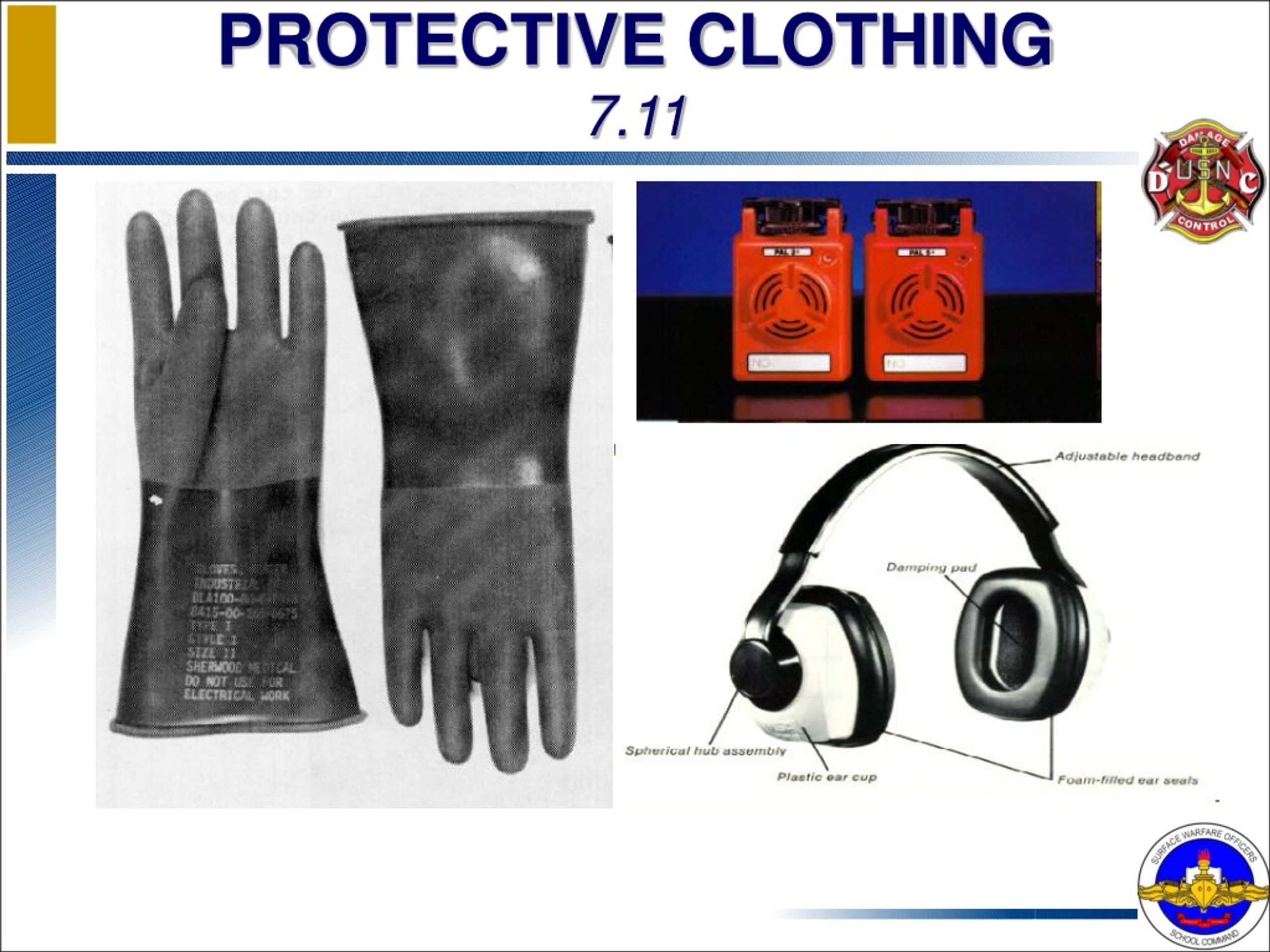
  15. HAND PROTECTION

  16. HAND PROTECTION • Natural-Latex • Resistant against acids, caustics, abrasion from sand blasting, grinding • General Purpose Use • Butyl Rubber • Resistant to Toxic chemicals, gases, water vapor, oxidation, and ozone attack • Neoprene Rubber • Oils, greases, petroleum, tear resistant

  17. Milled Nitrile Use where sense of touch is a must Stand up to mechanical abuse Natural Rubber Good pliability over large temperature range Long term resistance to chemicals & acids Vinyl Coated Chemical & abrasion resistant Use for handling oils, acids, caustics, most solvents HAND PROTECTION

  18. HEAD PROTECTION • Helmets/Hardhats protect crewmembers from: • Falling and flying debris • Impact with low overheads

  19. HEARING PROTECTION All hands shall comply with hazardous noise labels Wear assigned hearing protective devices Insert Earplug Circumaural Muffs

  20. BODY PROTECTION/COVERALLS • Should provide comfort of movement • Selection and way it protects wearer vary from vendor to vendor • Should not be plastic for GFE evolutions (Causes static electricity)

  21. SAFETY SHOES AND BOOTS • Water resistant leather • Heels and soleshave treads • Non-marking • Non-sparking • Water/Fuel resistant • Steel toe Chukka

  22. MISCELLANEOUS PROTECTION • Chemlites • Flashlight • Harness/lifelines • Communications • Personal Alert Safety System “PASS” • PRE-Alert signal 7-10 sec prior to alarm PASS uses 2 “AA” batteries

  23. ANY QUESTIONS?

  24. SUMMARY • We described the selection criteria for personal protective clothing and equipment • We described the cause, effects and prevention of occupational dermatitis.

  25. THE END THE END