Exploring Chinese Innovations and Trade: Porcelain, Calligraphy, and the Silk Road
In this assignment, students will define porcelain and calligraphy while discussing the products traded by China along the Silk Road, including silk, tea, steel, paper, and porcelain. Test corrections allow students to improve their grades by correcting missed questions on a separate sheet. Additionally, students will investigate a chosen Chinese invention, detailing its development, description, leading factors, evaluation methods, and its historical and contemporary impact. Research is encouraged for deeper insight.

Exploring Chinese Innovations and Trade: Porcelain, Calligraphy, and the Silk Road
E N D
Presentation Transcript
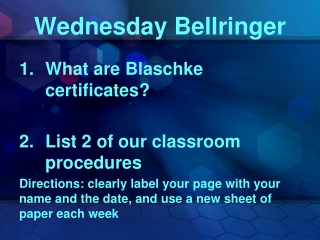
Bellringer 3/5 3. Define porcelain and calligraphy 4. What products were traded by China along the Silk Road?
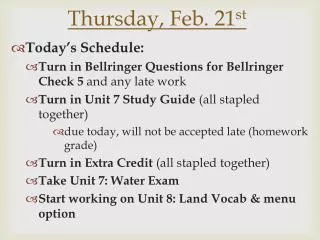
Test Corrections • For each question missed, you may correct that question for 1 point each • Do corrections on a separate sheet of paper and staple it to the original test • For credit, you must provide the correct answer and the page number for where you found that answer • Test corrections are due Friday • If you do not correct, your current grade stands
Chinese Society Coach Crews World History
Discussion Notes • A Growing Economy (Tang, 618) A. Farmers grew more crops • More land • Better irrigation • New rice, tea • More food meant more people
Discussion Notes B. Trade • Roads and waterways • Silk Road • Silk, tea, steel, paper, and porcelain
Invention Clear Table Choose an invention of the Chinese and provide the following on your table: • Reason it was developed • Words that describe it • Things leading to invention • Ways it was evaluated • The impact then and now • Adaptations of the invention • What does it make you think of? ** You may use your device for additional research ** Place in the basket upon completion ** 15-point homework grade