The Transformation of Ancient Rome: From Republic to Empire
This overview explores the geography and political structure of Ancient Rome, tracing its evolution from the Roman Republic (509 BCE - 27 BCE) to the establishment of the Roman Empire (27 BCE - 476 CE). Key themes include the significance of Italy's geography for trade, the social struggles between Patricians and Plebeians, the codification of laws through the Twelve Tables, and the impact of figures like Julius Caesar and Augustus on the political landscape. Understand the Republic's checks and balances and the eventual transition to imperial rule.

The Transformation of Ancient Rome: From Republic to Empire
E N D
Presentation Transcript
Ancient Rome From Republic to Empire
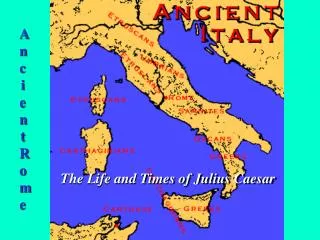
Geography • The Sea: • Italy located in the middle of the Mediterranean Sea • Makes it a center for trade • Rely more on land than sea however for growth of civilization (unlike the Greeks) • The Land: • Mountainous terrain, but also includes many navigable rivers and fertile valleys. • Soil adept to agriculture • Wheat and grapes
Influence of the Etruscans and the Greeks • Writing • Religion • The Arch
The Roman Republic: 509 BCE - 27 BCE http://www.youtube.com/watch?v=yvsbfoKgG-8
Roman Republic Video Topics • During the video (part one and two) take notes on the following topics: 15 total • Romulus and Remus Story • Geography of Rome • Republic Structure of Government • Roman Conquests/Soldiers • Slaves/Revolts
Republican Government • Republic: a form of government where citizens have the right to vote for their officials • Rome’s Republic: • At first dominated by the wealthy aristocratic class called the Patricians • Conflict of the Orders: • The lower class (98% of the population) called the Plebians fight for increased decision making power in the government process • Compromise: • 2 elected officials from the Plebian class called Tribunes serve as the head of the Assembly • Twelve Tables – a written code of law hung in the Forum where all citizens could read and know the laws (creates equality under the law)
Republican Government • Branches of Rome’s Republic Government: • Consuls : 2 elected leaders of Rome who served for one year periods (in charge of overseeing the government and the army) • Senate: chosen from aristocratic class and seats often passed down from father to son – in charge of law making • Assemblies: drawn from the lower class with limited authority to propose laws or veto laws (led by Tribunes) • Dictator: one man elected in times of crisis to command thee Republic with sole authority (term limit of 6 months) • Roman Army: divided into legions and controlled by Generals. Soldiers were volunteers and professionals but must be land owners (i.e. citizens). • http://www.youtube.com/watch?v=yhnWyRvC1dU
The Twelve Tables, 450 BCE • Providing political and social rights for the plebeians. • Written on a series of tablets hung in the forum • Significant because it allowed greater equality under the law
Roman Law • The Twelve Tables were an early example of the importance of written law and set a precedent for further equality guaranteed by law to all citizens: • the right to receive equal treatment under the law. • the right to be punished only for actions, not thoughts. • the right to be considered innocent until proven guilty.
Collapse of the Roman Republic • Economic: growing gap between rich and poor • Wealthy landowners increasingly used slaves which put small farmers and laborers out of work • Social Unrest: growing unemployment led to social unrest • Poor farmers moved into overcrowded cities • Lack of jobs • Shortage of grain supplies • Riots • Senators using violence • Military Upheaval: soldiers loyalty gradually changed from the Roman state to their generals
Collapse of the Republic Cont. • Julius Caesar: Rome’s most infamous general http://www.youtube.com/watch?v=JO565zLOQSc • Became governor of Gaul (modern day France) after his army conquered it • Republic government not able to maintain peace so Caesar and 2 other generals form a Triumvirate of rulers (3 rulers divide duties of governing Roman territories) http://www.youtube.com/watch?v=Z88_UTf23nc • Eventually Caesar marches his army into Rome and defeats that other generals and proclaims himself Dictator for life • Makes reforms, creates jobs, redistributes land to the poor • Senators assassinate him - grow weary of his ego and power trip and they conspire to him • http://www.youtube.com/watch?v=Z88_UTf23nc
The Roman Empire: 27 BCE - 476 CE
The Roman Empire • Augustus: First Emperor of Rome • Caesar’s death kicks off a 15 year long civil war with his adopted son and nephew Octavian as the victor • Essentially dismantles the Republic and creates an Imperial government • One ruler, the Emperor, has sole authority • Senate still exists however their power is sharply decreased. • He creates the first Civil Service • He hires people from the plebian class to work for the government to help administer the Empire • His policies set off a 200 year peace within the realm which historians call the PaxRomana or Roman Peace
The Roman World • Values: • Emphasized loyalty, discipline • A practical people who valued strength more than beauty and usefulness • Slaves • Important to the Roman economy, perhaps more so than in any other civilization at the time • Most were war captives (men, women and children) • Some forced to be Gladiators • Gods: • Polytheistic (belief in many gods) • Public and private worship • Took on Greek Gods
The Roman World • Culture: • Wealthy lived extravagantly while the poor barely survived relying on grain supplies from the government • Games – gladiator fights, naval battles, chariot races • http://www.youtube.com/watch?v=xvRWUCfAPs0&feature=relmfu • http://www.youtube.com/watch?v=dfSTZUEH95Q&feature=related • http://www.youtube.com/watch?v=CWCwnkdPPCc&feature=related • http://www.youtube.com/watch?v=s66zFW3nogU&feature=relmfu • Roman Baths/Aqueducts • http://www.pbs.org/wgbh/nova/lostempires/roman/ • http://www.youtube.com/watch?v=6snVyK6gQCE
The Empire in Crisis: 3rd Century • http://www.youtube.com/watch?v=3PszVWZNWVA • Rome’s Economy Weakens: • Hostile tribes from Asia, Germany, France etc… invade Roman territory disrupting trade • Pirates on the Mediterranean disrupt trade • Gov’t raised taxes • Inflation – decrease in the value of money while prices go up • Over worked soil led to food shortages and famine • Military and Political Turmoil: • Rome could no longer supply enough of their own soldiers and hired mercenaries (foreign soldiers who fought for money) • Loss of patriotism
Emperor’s Attempt Reform • Diocletian r. 284 CE – 305 CE • Claimed to be descended from Roman Gods • Severely limited personal freedoms and restored order • Doubled the size of the Empire • Controlled inflation by setting prices • Divided the Empire in 2 parts: • East – Greek speaking • West – Latin speaking • Purpose was to better administer the large Empire
Constantine • Gained control of the western part in 312 CE • Continued many of Diocletian’s reforms • Secured control of the east through military campaigns thus reuniting the Empire • Moved the capital from Rome to Istanbul in the east and renamed it Constantinople • Strategically located for trade and defense • Shifted power from west to east • After his death the empire was again divided and would never recover
The Western Empire Crumbles • Germanic Invasion: 370 CE Mongol nomads, Huns invaded Germanic tribes on Rome’s Northern border. • Causes Germanic tribes to flee their lands into Roman territory • Invaded Roman lands in Italy, Gaul, and Spain • Even attacked and ransacked the city of Rome itself in 410 CE • Attila the Hun: united the Huns into a powerful fighting force • Took an army of 100,000 and terrorized both the east and western parts of the Empire • Protective walls around Constantinople were successful in keeping the Huns out • Attila’s army went after the city of Rome itself but were unable to control it due to disease, famine and then Attila’s own death
Survival of the Eastern Empire • Eastern Empire Lives On: • Last Roman Emperor – 14 year old boy who fled from power due to continued German attacks in 476 CE • Left the west in disarray and leaderless • Eastern Half Survives: • Came to be known as the Byzantine Empire • Was never taken by the Huns or the Germanic tribes • Emperors continue to rule, trade flourishes, remains an important Mediterranean influence for another 1000 years.
The Legacy of Rome • Republic Government • Roman Law • Latin Language • Roman Catholic Church • City Planning • Romanesque Architectural Style • Roman Engineering • Aqueducts • Sewage systems • Dams • Cement • Arch