Download
1 / 2
20 likes | 141 Vues
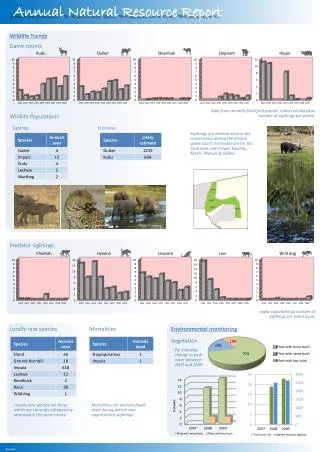
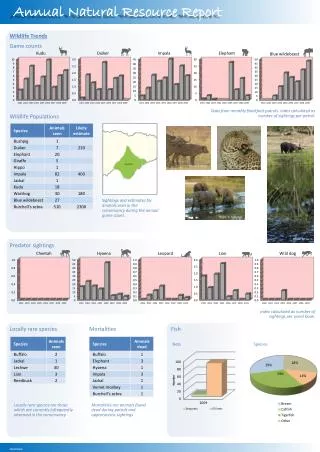
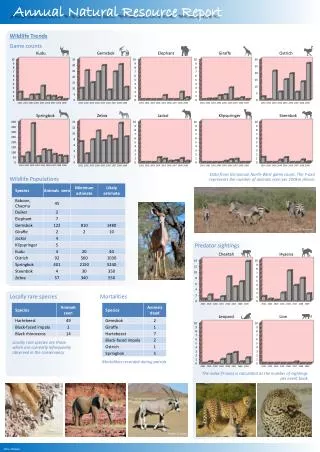
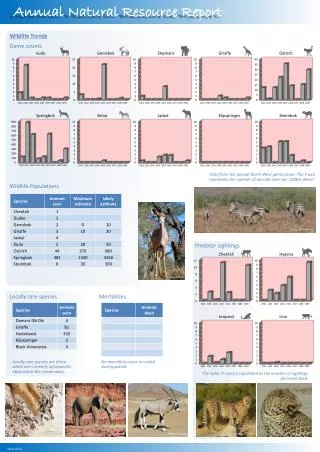
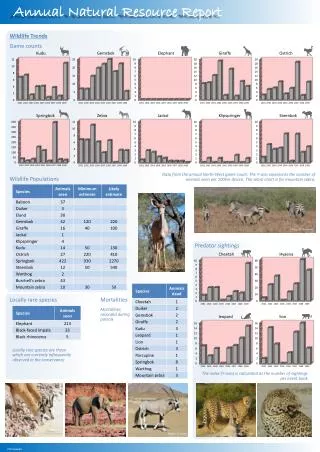
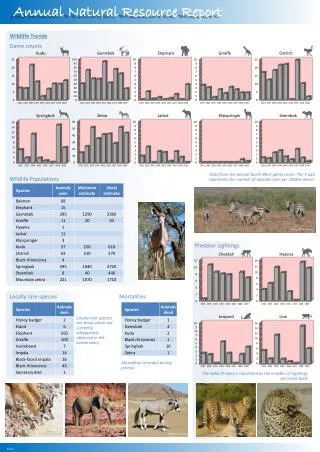
This report presents findings from the annual game count in the North-West Conservancy, detailing wildlife populations and trends observed. The data reflects the number of animals seen per 100 kilometers driven, highlighting both common and locally rare species. It covers aspects such as predator sightings, mortalities, and the impacts of human-wildlife conflict and poaching. The performance of natural resource management is assessed, identifying areas needing improvement through environmental monitoring. Graphs illustrate rainfall and wildlife use, assisting in targeted conservation efforts.

E N D
Annual Natural Resource Report Wildlife Trends Game counts Data from the annual North-West game count. The Y-axis represents the number of animals seen per 100km driven. Wildlife Populations Photo: V. Guillemin Predator sightings Photo: A. Jarvis Locally rare species Mortalities Locally rare species are those which are currently infrequently observed in the conservancy Mortalities recorded during patrols The index (Y-axis) is calculated as the number of sightings per event book Photo: A. Jarvis Photo: S. Linder Photo: S. Linder Photo: V. Guillemin Photo: A. Jarvis Torra
Torra - 2009 Wildlife Use Wildlife Income Wildlife Introductions Photo: H. Denker Natural Resource Management Threats Performance: Human-Wildlife Conflict Poaching WeakGood Incidents Incidents Species 2009 Environmental monitoring Red bars indicate weak areas in the conservancy management performance which need to be addressed. Green bars indicate positive management performance. Rainfall (mm) Effort: Damage The species chart indicates the most troublesome to least troublesome conflict species in the conservancy. The Y-axis in HWC and poaching charts represents number of incidents. Years with no bars indicate gaps in data collection Torra