ORIGIN AND DOMESTICATION
Explore the fascinating history of agriculture and the domestication of cultivated plants, tracing back to possibly 10,000 years ago at the end of the Ice Age. Key theories from prominent figures like Vavilov, Sauer, and Harlan highlight various centers of origin for crops worldwide. Archaeological evidence reveals the emergence of agricultural villages in the Fertile Crescent and the domestication of diverse plants such as wheat, rice, and maize. Discover the methods of plant domestication, including vegetative and seed propagation, that transformed human culture and established agricultural practices.

ORIGIN AND DOMESTICATION
E N D
Presentation Transcript
ORIGIN AND DOMESTICATION OF CULTIVATED PLANTS
ORIGIN OF AGRICULTURE • Possibly 10,000 yrs ago • Ties to end of Ice Age • Many differing opinions: Vavilov – Russian plant geneticist eight independent centers (1951) Sauer – cradle in Southeast Asia woody areas vs. river valleys vegetative methods
Opinions (cont) Harlan – opposed Vavilov’s eight centers wide geographic areas called non-centers three large independent systems: - Near East and Africa - China and Southeast Asia - Mexico and South America Bender – transition from hunter/gatherer to producer - profoundly changed human culture Harlan;Hawkes – climatic/cultural factors - motivated man to “invent agriculture”
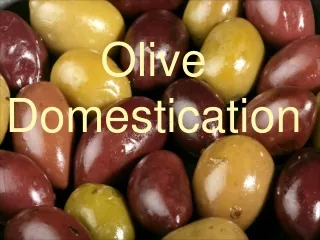
What Do We Know For Certain? Definite evidence from archeological sites: - agricultural villages 8000-9000 B.C. - Fertile Crescent - diversity of crops: wheat, barley, lentil, oats, vetch, dates, grapes, olives, almonds, figs, pomegranates
Chinese Center of Agriculture - About 4000 B.C. Crops domesticated: millet, chestnuts, hazelnuts, peaches, apricots, mulberries, soybeans, and rice
Southeast Asia/Indonesia - Domesticated Rice around 6000 B.C. other crops followed: sugar cane, coconut, banana, mango, citrus
New WorldSouthern Mexico and Central America 5000 – 7000 B.C. maize (corn), sweet potato, tomato, cotton, pumpkin, peppers, squash, avocado, pineapple
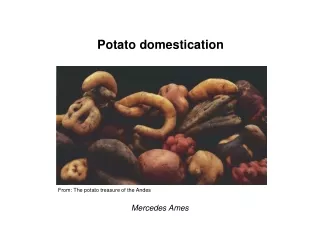
South America Broad “non-center” stretches from Chile northward to Atlantic Ocean and eastward into Brazil - snap beans and lima beans 6000 B.C. - other crops: potato, peanut, pineapple, cashew, Brazil nut, peppers, tobacco, tomato
Australia Only one crop: macadamia or Queensland nut
United States No major cultivated crop origins - relies on introduced crops - many minor fruit and nut crops: American grapes and plums, pecan, chestnut, hickory nut, hazelnut, black walnut, persimmon, blueberry, raspberry, blackberry, and cranberry
United States (cont) Additional crops: - sunflower (important oil crop) - hops - Jerusalem artichoke - some grasses - many ornamentals - timber tree species
Methods of Plant Domestication Vegetative (Asexual) Propagation - observation/experience revealed - some of the oldest woody plants: grape, fig, olive, mulberry, pomegranate, quince - many tree fruit species native to near east: almond, apple, pear, cherry, walnut
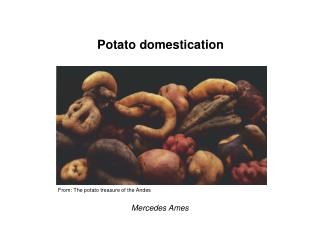
Vegetative (Asexual) Propagation(cont) Many ancient plants: - potato (tuber) - sweet potato (an enlarged root) - banana (rhizome) - bamboo (rhizome) - ginger (rhizome) - filbert (layering) - pineapple and date (suckering)
Methods of Plant Domestication Seed (Sexual) Propagation - harvesting wild grass seeds led to two population types: 1) shattering - reseeded itself 2) nonshattering - harvested and resown - nonshattering thus improved as it was more easily harvested
Seed (Sexual) Propagation (cont) Close planting of harvested seeds led to better competition against weeds - selects stronger, vigorous plants - larger seeds increase germination - harvested crop from superior seed - unknowingly developed superior
Seed (Sexual) Propagation (cont) Other desirable characteristics: - loss of seed dormancy - increased flower numbers - larger inflorescences - trend toward determinate growth Sometimes change is slow/complex Sometimes rapid with few genes