Download
1 / 9
100 likes | 220 Vues
Explore the intertwined fates of Dionysus, the god of wine and fertility, and Apollo, the god of prophecy and the arts. Learn how Dionysus, revered in ancient Greece, became the patron of theatre and the catalyst for its origins. Discover the significance of the Dionysian cult’s celebrations and the establishment of permanent theaters by Pisistratus for tragic performances. Unravel the mystery of early playwrights like Sophocles, Aeschylus, and Euripides, and understand Apollo's role in Greek mythology alongside his half-brother Dionysus.

E N D
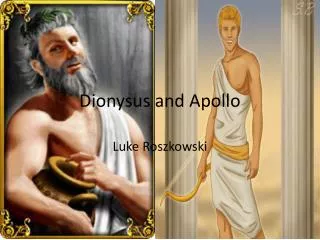
Dionysus and Apollo Luke Roszkowski
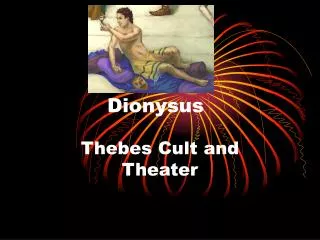
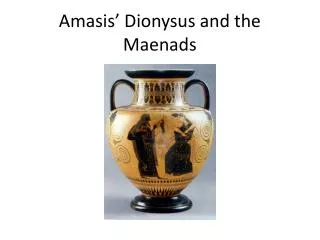
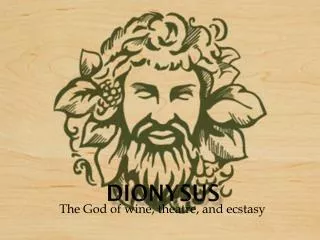
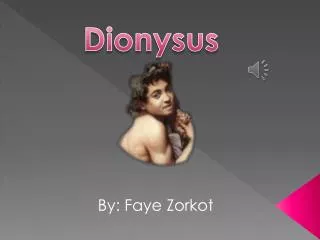
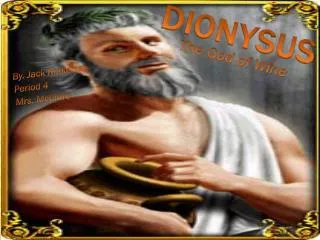
Dionysus • Dionysus was a patron for the arts. He was the god of fertility and wine. In ancient Greece, wine and fertility was very important in everyday life so Dionysus was a pretty big deal. Dionysus’ cult takes responsibility for being the origin of Greek Theatre.
Dionysus played the aulos (double pipe). • Because of his popularity, every December a celebration was thrown where a statue of Dionysus was taken from Eleutherai to the city. This statue would be placed in with the God sanctuaries and a bull would be killed there, all for this God!
All of the plays Dionysus’ cult performed were based around singing and dancing. This was very successful. Then, one day a Dionysian priest named Thespis decided to speak the dialogue instead of sing and therefore the first actor was born!
Pisistratus • Pisistratus made a theatre for Dionysus. This theatre was made for the performance of Tragedy.
Theatre • When Theatre was finally established, the writers began to experiment with different genres. Such as comedy (486 BC) and Satyr plays (500 BC).
Nobody really knows who actually wrote most of these plays but they are thought to be written my Sophocles, Aeschylus, and Euripides.
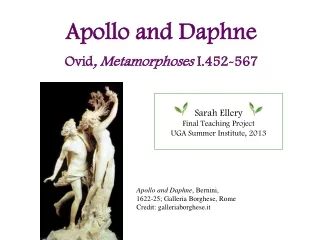
Apollo • Apollo is the god of, prophecy, music, intellectual pursuit, healing, plague, and sometimes the sun. Apollo is the known for his light radiance. • Dionysus is the half brother of Apollo.