
SlideServe
Menu
Préférences
© SlideServe · v2026

Recent Findings on Tegu and Nile Monitor Diets: Insights from Florida Research

dawn-austin avatar
17 diapositives · 299 Views · Nov 01, 2014

This update presents findings from ongoing research on Tegu and Nile Monitor lizards by the Florida Fish and Wildlife Conservation Commission and the University of Florida. The study examines the gut contents and telemetry data of these reptiles, revealing diverse diets including amphibians, reptiles, mammals, insects, and plants. Key observations include nesting behaviors, sex ratios of clutches, and notable prey items such as the Southern Leopard Frog and Hispid Cotton Rat. These insights contribute to our understanding of these invasive species in Florida ecosystems.
Recent Findings on Tegu and Nile Monitor Diets: Insights from Florida Research - slide 1
01 / 17Recent Findings on Tegu and Nile Monitor Diets: Insights from Florida Research
1 / 17

Télécharger la présentation

Recent Findings on Tegu and Nile Monitor Diets: Insights from Florida Research
Une image / un lien ci-dessous est fourni (tel quel) pour télécharger la présentation

Politique de téléchargement : le contenu du site vous est fourni TEL QUEL pour votre information et votre usage personnel ; il ne peut être vendu, concédé sous licence ni partagé sur d’autres sites sans l’accord de son auteur.Le contenu vous est fourni TEL QUEL, pour votre information et votre usage personnel uniquement. Téléchargez la présentation en cliquant sur ce lien. Lors du téléchargement, si vous ne parvenez pas à télécharger une présentation, l’éditeur a peut-être supprimé le fichier de son serveur.Pendant le téléchargement, si vous ne parvenez pas à obtenir une présentation, le fichier a peut-être été supprimé par l’éditeur.

F I N

Plus de contenu associé

Transcription de la présentation
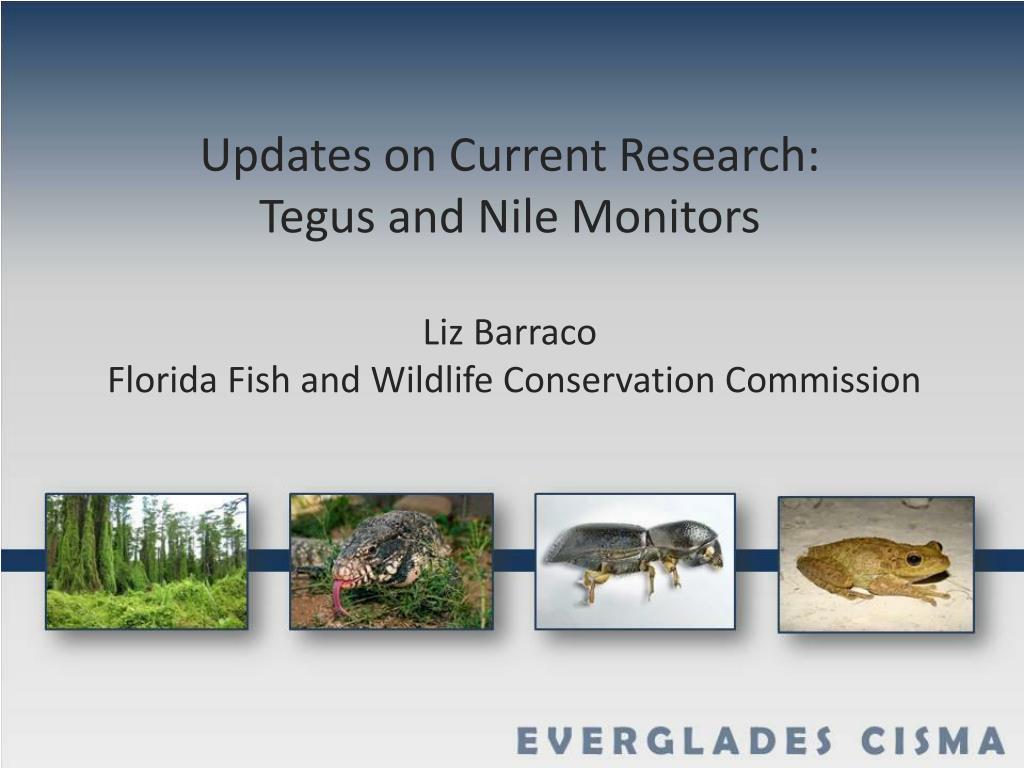
  1. Updates on Current Research:Tegus and Nile MonitorsLiz Barraco Florida Fish and Wildlife Conservation Commission

  2. Research Updates Nile monitor diet study (UF) Tegu telemetry study (UF) Tegu diet study (FWC)

  3. Nile Monitor Gut Content Analysis • 19 specimens (18 had contents, 16 >1 prey item) • Amphibians: • Marine Toad (Rhinella marina), • Southern Leopard Frogs (Lithobatessphenocephalus), • Reptiles: • Brown Basilisk (Basiliscusvittatus) • Eastern Glass Lizard (Ophisaurusventralis) • Brown Watersnake (Nerodiataxispilota) • Banded Watersnake (Nerodiafasciata) • Corn Snake (Pantherophisguttatus), • Three-striped Mud Turtle (Kinosternonbaurii). • Mammals: • Hispid Cotton Rat (Sigmodonhispidus), • Other: • crustaceans, spiders, snails, parasites (Acanthocephalans, Nematode, and unknown), reptile eggs, insects (Formicidae, Pentatomidae, Coleoptera, Blattidae, Lepidoptera, Hemiptera, Curculionidae, Scarabaeoidea, Elateroidea, and Orthoptera), a fish, and plastic objects

  4. Tegu Telemetry • Female tegu behavior • Nesting • Sex ratio of clutch

  5. ` • TuMe380 • 7 April 2014 – 18 June 2014 • 23 May 2014 • 18 eggs • 18 June 2014 • 14 viable

  6. TuMe409 • 21 April 2014 – 11 June 2014

  7. TuMe440 • 5 May 2014 – 18 June 2014 • Tracked to multiple locations • 25 June 2014 • 27 eggs • 25 hatched

  8. Tegu Telemetry

  9. Tegu Telemetry • Female tegu behavior • Nesting • Two different nest structures • Sex ratio of clutches • Upcoming

  10. Tegu Gut Contents Analysis

  11. Tegu Gut Contents Analysis

  12. Tegu Gut Contents Analysis

  13. Tegu Gut Contents Analysis • Insecta (89; 71%) • 24 families • Romaleidae (60; 67%) • Lubber grasshopper, Romaleaguttata • Carabidae (17; 19%) • Scarabidae (11; 12%)

  14. Tegu Gut Contents Analysis • Plantae (76; 60%) • 17 families, 26 species • Chrysobalanaceae (20; 26%) • Cocoplum, Chrysobalanausicaco • Arecaceae (20; 26%) • Anacardiaceae (16; 21%) • Poisonwood, Metopiumtoxiferum

  15. Tegu Gut Contents Analysis • Vertebrates (49; 39%) • Mammalia (28; 57%) • Cricetidae (16; 57%) • Cotton rat, Sigmodonhispidus • Opossum, black rat, cat • Repitilia (9; 18%) • Snakes (4; 45%) • Lizards, turtles

  16. Tegu Gut Contents Analysis • Varied diet • 75% had multiple diet items • Where are the eggs? • Statistical analysis • Size class • Gender • Collection location • Collection date • Body condition

  17. I hope you have enjoyed your lizard update!